

What Is the DeFi Market
DeFi stands for decentralized finance. It is a set of protocols and apps built on public blockchains that let people do financial things - payments, lending, trading, insurance, asset management - without needing a bank or brokerage in the middle. Think of it as an open, borderless system where you hold your own assets and interact directly with code. The idea is to give you more control and cut out fees that traditional intermediaries have charged for decades.
I first got curious about this space when I saw how cryptocurrency moved value without asking permission. DeFi takes that further. Instead of just sending coins, you can lend them, borrow against them, trade them on a decentralised exchange , or earn yield by providing liquidity. The infrastructure is public, the code is open source, and anyone with an internet connection can participate.
Where It Started
The story usually begins with Bitcoin in 2009. Satoshi Nakamoto created a secure distributed ledger that worked without a central authority. That breakthrough sparked the broader crypto universe. There is still debate over whether Bitcoin itself counts as DeFi - some say it was the trigger, not a DeFi protocol. Ethereum arrived later and added smart contracts, which are bits of code that run automatically when conditions are met. That change opened the door for all the lending, trading, and derivative apps we see today.
Public attention spiked around 2020. The pandemic shook markets, and people started looking for alternatives. Interest dipped, then came back stronger in 2021 as tools got easier to use and more people understood how things worked. One report tracked DeFi users growing 35 percent year over year to 6.7 million by early 2023. Total value locked in DeFi protocols hit $43 billion around the same time. Those are snapshots, not current numbers, but they show the scale.
DeFi became one of the most discussed fintech terms in 2020. More people subsequently began understanding and adopting the technology for personal and business purposes.
Core Things You Can Do
DeFi is not a single app. It is a category. Here are the main things people use it for:
Common DeFi Activities
- Payments and transfers - move digital assets without bank hours or approval
- Lending and borrowing - protocols like Aave and Compound connect lenders and borrowers
- Trading on a DEX - swap tokens without a central exchange holding your funds
- Self-custody wallets - you hold the keys, not a company
- Stablecoins - tokens pegged to dollars or other assets to reduce volatility
- Yield generation - earn fees by lending or providing liquidity
- NFTs - own and trade unique digital items
- Flash loans - borrow and repay in one transaction for arbitrage
- Derivatives - perpetual futures and other contracts tied to underlying assets
- Insurance - smart contracts that pay out when oracle data triggers them
- Tokenized real-world assets - Treasury bills and other traditional assets on chain
The decentralised cryptocurrency exchanges like Uniswap, Curve, and SushiSwap let you trade directly from your wallet. No custody required. Some use order books. Others use automated market makers - more on that next.
How Decentralized Exchanges Work
A traditional exchange matches buyers and sellers with an order book. A DEX using an automated market maker works differently. Liquidity providers deposit pairs of tokens - say ETH and USDC - into a pool. A smart contract keeps the ratio between them balanced. When you swap, you trade against the pool, not a person. Price moves based on supply and demand in that pool.
Liquidity providers earn a cut of every swap fee. Large trades shift the ratio more, so fees and price impact rise with trade size. Aggregators like 1inch route your swap across multiple DEXs to find the best price. They can split a trade into smaller pieces, using intermediate tokens like DAI or wrapped ETH when a direct pair does not exist.
The inventory is instead supplied through liquidity pools. A piece of smart-contract logic attempts to keep the ratio between the two assets near a target level.

Gas Fees and Network Costs
Every transaction on Ethereum costs gas. You pay for the computation and network resources your transaction uses. The fee equals gas used times the effective gas price. That price has two parts: a base fee that burns and a priority fee (tip) that goes to validators. You set a max fee - if the actual cost is lower, you get the difference back.
Network congestion, transaction complexity, and your fee strategy all affect cost and speed. Tools like 1inch Pro let you pick a Market strategy (average price, balanced) or Aggressive (higher tip, faster confirmation). For people who do not want to manage gas, some interfaces offer gasless swaps, including cross-chain swaps without bridges.
Fees have been volatile. Early data showed Ethereum processing 15 to 30 transactions per second - far below Visa. Layer 2 networks like Arbitrum help. They process transactions off the main chain and settle back periodically. Moving assets to Arbitrum can take minutes; moving back can take days. But swaps on Layer 2 cost a fraction of mainnet fees.
Ways to Reduce Gas Costs
- Transact when network demand is lower
- Use a Layer 2 network like Arbitrum or Optimism
- Pick a Market gas strategy instead of Aggressive
- Batch multiple operations into one transaction
Oracles and Derivatives
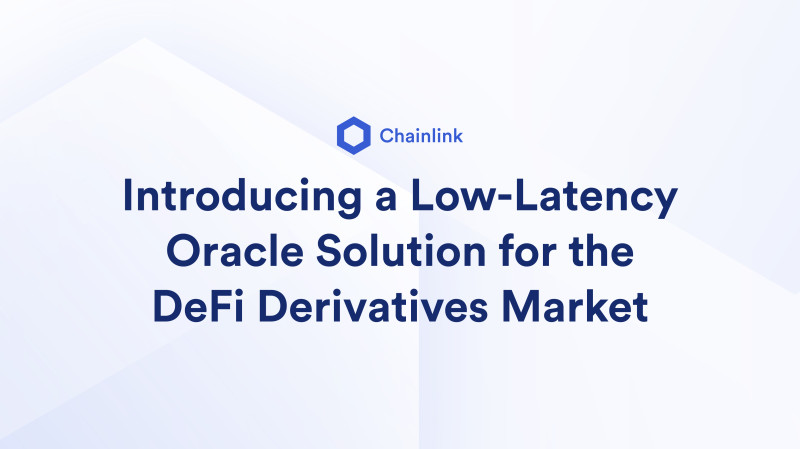
Smart contracts cannot see outside data on their own. They need oracles to feed them prices, weather, sports scores - anything off-chain. Derivatives protocols use a hybrid model: on-chain contracts handle settlement, off-chain oracles supply market data. Low latency matters. A stale price can lead to bad execution and create opportunities for value extraction, often called MEV.
Chainlink announced a pull-based oracle design that delivers updates per block and keeps prices private until settlement. That reduces frontrunning and cuts gas costs. The system verifies data on-chain using the same node network that secures trillions in transaction volume. It is built for derivatives markets that need speed and fairness.
A stale or delayed price can produce poor execution and create opportunities for value extraction. Traders may be able to predict the direction of an on-chain oracle update several seconds before it is published.
Liquidation Risk and New Ideas
Most DeFi lending uses collateralized debt positions. You deposit crypto, borrow against it, and if the collateral drops fast, you get liquidated. Forced sales in a crash can cascade. Vitalik Buterin proposed an alternative: use options contracts instead of debt. The goal is to give users exposure to a basket of assets without the cliff-edge of sudden liquidation. The portfolio would drift gradually from its target instead of getting wiped out.
This approach could use slower oracles, similar to prediction markets, reducing the risk of acting on manipulated prices. It is especially relevant for algorithmic stablecoins, which have failed when real-time oracles were gamed. The tradeoff: regular rebalancing is needed, and it is not clear if that can be done cheaply enough. The idea is still theoretical.
Buterin said he would feel much safer holding an algorithmic stablecoin built on options than one dependent on real-time feeds that could be manipulated. That tells you how serious the oracle problem is.

Managing Loan Risk Automatically
Loan-to-value ratio is central to DeFi lending. Low LTV means more safety buffer. High LTV means more capital efficiency but less room for error. Traditionally, risk parameters are set off-chain through governance - slow and often conservative. Sentiment, a protocol on Hyperliquid, uses a GARCH volatility model to adjust LTV dynamically on-chain. When volatility spikes, LTV drops automatically. When things calm down, LTV can rise.
The system takes price snapshots every 24 hours, stores history in a contract, and uses a zero-knowledge proof to verify the calculation followed the model. No governance delay. No human bottleneck. The result: more frequent updates, better capital efficiency, less overhead. Future work could add cross-asset correlation and dynamic interest rates.
How Dynamic LTV Works
- Oracle collects price data every 24 hours
- GARCH model estimates volatility from history
- LTV equals one minus volatility estimate
- Zero-knowledge proof verifies the calculation on-chain
- Protocol updates LTV automatically
Who Holds Power in Block Building
A New York Fed study looked at Ethereum block builders and proposers from September 2022 to September 2024 - after the switch to proof of stake. Builders construct blocks. Proposers sign them. Private transactions can contain valuable arbitrage. Builders with access to more valuable private transactions consistently get a larger share of block profits.
The study used crypto hacks and market crises as natural experiments. These events surge transaction volume and create private opportunities. A 1 percent increase in private transaction value led to a 0.57 percent increase in builder profit share. Public transactions do not give the same advantage - they are visible to everyone. Exclusive information is the leverage.
This creates a centralization tension. The tech is decentralized, but the intermediation chain can concentrate when a few builders control valuable private order flow. Large institutions entering via Ethereum ETFs could amplify this. If a handful of players dominate critical functions, they could influence financial activity beyond crypto. Policymakers are watching.
The underlying technology is described as decentralized, but the intermediation chain can become concentrated when a small number of builders control valuable private information.

Bringing Real Assets On Chain
DeFi has sharp boom-and-bust cycles. Tokenized real-world assets - Treasury bills, corporate bonds, real estate - can smooth that. MakerDAO is the main example. Before 2022, it rode the same cycles as the rest of crypto. Then it diversified heavily into U.S. Treasuries. Within two years, those assets generated about one-third of MakerDAO revenue. The protocol saw unprecedented stability.
Tokenization gives DeFi more options for deploying capital and access to assets that move differently from crypto. But it adds requirements: verified custody so tokens match reserves, liquidity paths for off-chain markets, live yield data from oracles, and aligned counterparty records. Tokenization does not remove these risks - it just moves them on-chain.
Chronicle, the first oracle on Ethereum (founded 2017), spearheaded this with MakerDAO in 2020. Projects like Centrifuge and Superstate now use its Verified Asset Oracle.
Ethereum Foundation's Direction
The Ethereum Foundation calls DeFi central to its mission. In a 2026 post, they said DeFi is not a speculative bet - it is the inevitable evolution of finance. They want it permissionless, censorship-resistant, privacy-first, self-custodial, and open source. They use the term "Defipunk" for finance that could not exist without Ethereum - not just traditional finance on a new layer.
Current tools already serve millions: stablecoins anyone can hold, yield without a private banker, markets that never close. The Foundation wants to support builders pushing beyond today's apps - things like AI combined with on-chain futures to hedge future expenses, futarchy DAOs, zero-knowledge reputation for undercollateralized lending, and financial primitives we have not imagined yet.
Foundation Priorities for 2026
- Builder relationships - clear channels for teams to connect and share needs
- Security - secure by default, better auditing, runtime protections
- Decentralization and openness - move away from direct control
- Privacy - base infrastructure, not just a private stablecoin
- Standards and risk clarity - consistent vault, RWA, and disclosure formats
- Research and content - mechanism research, data analysis, accessible explanations
Hsiao-Wei Wang, Co-Executive Director, warned that growth can harden legacy constraints and lock in surveillance by default. The Foundation plans to defend against those pressures.
What Still Needs Work
DeFi is still immature. Smart contracts have bugs. Users are responsible for their own keys. Scams took more than $14 billion in one year per Chainalysis. Scalability remains a limit - Ethereum mainnet handles a fraction of Visa's throughput. Interoperability between chains is incomplete. Bridges and cross-chain swaps add trust assumptions.
Regulation is unclear. Legal enforceability of smart contracts, consumer protection, KYC, AML - regulators need answers. Sanctions have blocked some IP addresses, showing that decentralized systems still touch national jurisdictions. Traditional institutions are entering via ETFs and other vehicles, bringing capital but also centralization pressures.
The unbanked population - people without birth certificates or passports - represents a massive opportunity, estimated at hundreds of billions. Investment poured in: over $30 billion into private crypto companies in 2021 alone. But few pure-play public companies existed at that time.
DeFi infrastructure and its regulation are continually evolving. The sector has unresolved rough spots and incomplete answers to some challenges. At the same time, continued technical advances and new applications may support broader adoption.
Getting Started Yourself
If you want to explore, start with a self-custody wallet like MetaMask. It stores keys locally, not on a company server. Buy some ETH - you can use a card or bank wire. Expect fees. A test purchase of 100 euros worth of ETH cost nearly 6 euros in fees and took over 13 hours, mostly due to the payment provider. For significant amounts, move to cold storage. An internet-connected device is a different risk profile than an offline one.
Try a small swap on a DEX to see how it feels. Provide a tiny bit of liquidity to a pool. Watch how gas changes with network load. Read the docs. The learning curve is real, but the tools are improving. You do not need to understand everything at once.
Hey, don't skip the security basics. Write down your seed phrase. Store it offline. Never share it. If someone gets it, they get your funds. No support line can fix that.
The blockchain technology underneath all this is a distributed ledger. Transactions go into blocks, verifiers agree, blocks chain together. Changing history would break the chain. That is where immutability comes from. It is not anonymous - addresses are public. You can run a node or use a block explorer to see any transaction history.
Understanding how cryptocurrencies work helps you see why DeFi is built this way. It is not magic. It is code, economics, and incentives - all in the open. You can read the contracts. You can verify the state. That transparency is the point.













Comments on “What Is the DeFi Market? A Plain-English Guide to How It Works”
No comments yet. Be the first to share your thoughts.