
What Coins Are Stablecoins
Ever wonder what coins are stablecoins? I did too when I first dug into crypto. Simply put, they are digital tokens designed to hold a steady price while everything else swings. They link to something calm - the U.S. dollar or gold. That link is called a peg. One token should equal one unit of the backing asset. This calm is why they’re the bridge between old bank money and new blockchain rails. They’ve quietly become a huge part of crypto trading, making up a big share of all transactions recorded across the world.
The short answer to what coins are stablecoins: they hold a 1:1 peg to fiat or gold and use reserves or code to stay steady. They keep your digital wallet sane when markets go wild. For someone new, they’re the crypto currency for beginners because you don’t sweat nightly price drops. Fast sends. Low fees. No roller coaster. I like that they make the weird world of crypto feel normal. Unlike Bitcoin or Ethereum, they’re built to avoid drama - a relief for everyday users.
They hold a 1:1 peg to fiat or gold, use reserves or code to stay steady, and keep your digital wallet sane when markets go wild.
Why Stablecoins Stay Calm When Bitcoin Swings
Bitcoin swings. Ethereum crashes. Stablecoins stay calm. That line isn’t poetry - it’s by design. When the rest of crypto drops fast, a good stablecoin barely moves from its target. This helps people send money or save value without panic. The steadiness comes from backing, not hope. Globally, they’re gaining momentum as both a medium of exchange and a store of value, filling gaps left by traditional currencies in places with shaky money.
I like to think of them as the sane friend at a wild party. They give you digital money benefits - quick settlement, open ledgers - without the scary dips. For someone new, they answer the question explain cryptocurrency to me in a calm way. You can hold a coin that acts like the dollars in your pocket. That’s a big relief when other coins lose ten percent in a day. Businesses and individuals use them for payments, liquidity, and protection against currency swings.
How The Peg Stays At One Dollar
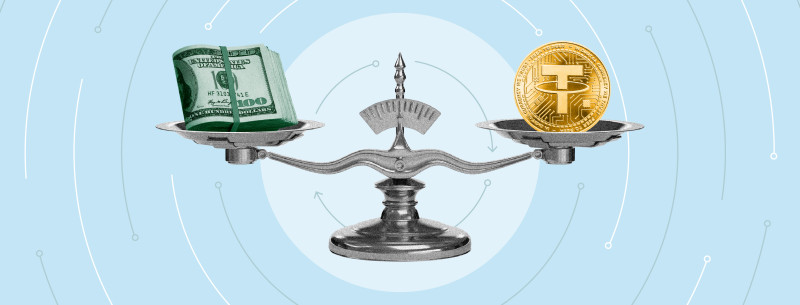
So how do they hold that steady value? Issuers hold reserves in safe places - cash or short government bonds equal to the coins in circulation. You give them a dollar, they mint a token. You redeem, they burn it. This mint-and-burn loop keeps supply matched to backing. The aim: digital currency perks like transparency and fast settlement, without the price swings tied to most crypto.
Another force is arbitrage. If the coin dips to ninety-nine cents, traders buy cheap and sell at a buck. That pushes price back to target. While Bitcoin can swing double digits daily, dollar-pegged tokens trade within fractions of a cent of target. This price discipline turns these digital assets into a low-volatility bridge between traditional money and blockchain infrastructure. Over-collateralization helps crypto-backed types absorb shocks.
While Bitcoin can swing double-digits daily, dollar-pegged tokens trade within fractions of a cent of target.
Main Types Of Stablecoins
Not all stablecoins work the same. Some use cash in a bank. Some use gold bars in a vault. Some use other crypto as backup. Others use code only. Knowing the type helps you pick the right one for your need. Fiat-pegged tokens are backed one-to-one by cash or cash equivalents in regulated banks, and reserves get audited to confirm each token has a match.
Kinds you will see
- Fiat-pegged like USDC and USDT backed by cash or equivalents.
- Commodity-backed like PAXG where each token is one ounce of gold.
- Crypto-backed like DAI, over-collateralized with other coins.
- Treasury-backed like USDY, tied to short bills and yield.
- Algorithmic like AMPL, use supply tweaks, but proved fragile.
The fiat crypto currency type is the most common. Simple: one token, one dollar in reserve. That’s the base for most everyday use - and the answer to what coins are stablecoins for many new users. Other types exist but carry different risk shapes. Commodity coins let you hold gold on chain. Crypto-backed ones use smart contracts to adjust positions and keep the peg.
Big Issuers You Should Know
Two names dominate the market. USDT (Tether) is the largest by market cap, with deep liquidity on almost every exchange. Traders love it for speed between positions. USDC (USD Coin) focuses on transparency. Circle publishes weekly attestations of reserves held in cash and short U.S. Treasuries. Both are widely supported as doorways to DeFi and payments.
Both pegged to one dollar. USDT wins on reach, USDC wins on trust. Other issuers include Paxos, PayPal’s PYUSD, and Ondo. For a USD crypto option, these are the big ones to learn first. Each plays a role in the bridge between banks and blockchain. Paxos also provides infrastructure for PayPal’s coin. Decentralized protocols like MakerDAO issue DAI governed by code, not a single firm.

Real World Use Cases
Businesses use these coins for real stuff, not just trading. They send supplier payments outside bank hours and cut FX spreads. Freelancers get paid direct without costly remittance services. Treasury teams park surplus in tokenized short bills. Marketplace settlements can use stablecoin payments to give sellers 24/7 access to funds.
Ways people use them
- Supplier payments across borders without wire queues.
- Global freelancer payouts that arrive in minutes.
- Short-term treasury management with full visibility.
- Programmable escrow that releases on customs clear.
Smart contracts can automate milestone payments. This reduces manual oversight and gives audit-ready transparency. It shows what coins are stablecoins can do beyond holding value. ERP integration lets accounting workflows connect with blockchain settlement through APIs - improving cash-flow forecasts without ripping out the old payments stack.
Cheap Cross-Border Remittances
Sending money home the old way can cost 5–7% through remittance shops. Stablecoins move the same value in minutes for a few cents. That helps migrant workers and global businesses a lot. In some regions, a $200 send costs about 60% less using stablecoins than fiat services. Traditional wires take days and hit $30–$50 per transfer.
Lower fees and better exchange rates matter for real families. This is a clear win for the best cryptocurrency for beginners who just want to help relatives. Speed and low cost make them a tool for inclusion, not just speculation. Any internet connection suffices - no bank account required - and the ledger gives end-to-end auditability for every cent moved.
Stablecoins can move the same value across borders in minutes for a few cents, dramatically reducing the cost for migrant workers and global businesses.
Risks You Still Need To Manage
Don’t skip this part. Stablecoins aren’t magic. Reserve transparency varies by issuer. A coin is only as good as the assets behind it. USDC shows strong attestations; others get more scrutiny for mixed reserves. Centralized issuers can freeze or burn tokens to comply with law - adding counterparty risk you must weigh.
De-peg risk is real. Even big tokens stray from one dollar under stress. The March 2023 USDC de-peg showed banking trouble spills over fast. Rules keep changing; smart contracts can fail. Decentralized stablecoins rely on code and have their own failure modes. The TerraUSD collapse in 2022 proved purely algorithmic designs can break under pressure.
Main risks to watch
- Reserve opacity or weak audits.
- Brief de-peg during market panic.
- Shifting regulation across jurisdictions.
- Counterparty or smart-contract bugs.
If you look at how to invest in stablecoins , know these risks first. Diversify and check who backs your coin. No coin is perfectly safe, but some are clearer than others. Illicit use is low - under 1% of on-chain tx - but regulators watch closely, and security bugs on exchanges remain a threat.
Rules And Regulation Around The World
Governments now pay close attention. The EU’s MiCA labels stablecoins as asset-referenced or e-money tokens. Issuers need licenses and strict reserves; significant coins face higher capital rules. Japan was early to regulate, with banks and trust companies under oversight. The U.K. proposes treating designated stablecoins like recognized payment systems, with prudential standards similar to Faster Payments.
The U.S. GENIUS Act sets issuer categories and demands one-to-one reserves held bankruptcy-remote. Singapore frames single-currency stablecoins pegged to G10 currencies with capital and redemption rules. Hong Kong runs a sandbox to test models. None of this is final everywhere, so compliance work continues. The goal: clarity and trust for users and institutions while keeping the bridge to blockchain open.
Privacy Coins Versus Stablecoins
Some folks confuse privacy coins with stablecoins. They’re different. Privacy coins like Monero hide sender, receiver, and amount using special crypto. Stablecoins show a transparent ledger to help compliance and audit. Privacy coins face stricter anti-money rules; stablecoins face reserve and licensing rules.
The goal differs: privacy coins hide data; stablecoins hide volatility. For everyday payments, stablecoins fit better. They are not the BSC network crypto privacy type, but they are clear and regulated. Both have roles, but solve different problems. Stablecoins prioritize price stability and act as a steady store of value. Privacy coins prioritize anonymity and can be highly volatile in price.

Stablecoins As Bridge To DeFi
DeFi means decentralized finance. Stablecoins are its backbone. They give liquidity for lending, borrowing, yield farming without price swings. This reduces loss in pools and lets global users join markets. Most DeFi protocols quote in stablecoins because steadiness enables sane math for interest and collateral.
If you want me to explain the blockchain , think of stablecoins as the steady fuel. They let people use open protocols with less fear of a sudden crash. That’s why most DeFi apps quote prices in stablecoins, not Bitcoin. Their on-chain transparency facilitates compliance while still allowing permissionless access for anyone with a wallet.
Store Of Value In Shaky Economies
In places with high inflation or currency controls, stablecoins act like a reliable dollar proxy. They preserve buying power when local money fails. People in Latin America and Africa adopt them fast for this reason. It’s a straightforward on-ramp to global finance. Retail adoption in those regions has shown strong year-over-year growth, driven by need for a calm store of value.
No need for a local bank that may limit withdrawals. This is why some call them the easiest way to invest in crypto for savings. They answer what coins are stablecoins by being practical, not theoretical. In countries like Turkey, stablecoin trading volume as a share of GDP leads the world - showing how useful they are when local money misbehaves.
How Stablecoins Match Old Bank Wires
Compare to SWIFT wires. Traditional takes 2–5 days and costs $30–$50 plus. Stablecoin sends in seconds to minutes and costs cents. Accessibility is 24/7 global, not bank-dependent. Transparency is limited with old rails but fully auditable on-chain with stablecoins. The risk profile shifts from bank delays to reserve and contract risk.
Side by side
- Speed: days vs minutes.
- Cost: $30-50 vs under $1.
- Access: bank hours vs any internet.
- Transparency: limited vs on-chain audit.
Of course, stablecoins carry reserve and contract risk. But for many, the trade-off is worth it. They show blockchain can beat old rails on speed and price. Merchant acceptance keeps growing, with stablecoins capturing a large quarterly market share in many regions - proving people want this calmer option.
Where Stablecoins Stand In The World
Adoption grows in many regions. Retail users in some areas show strong year-over-year growth driven by need for store of value. Merchant acceptance rises, with stablecoins taking big market share each quarter. Western Europe hosts large merchant markets, with the UK leading increases. Professional-sized transfers above one million also show similar upward trends across eastern Asia and Europe.
Middle East and North Africa see stablecoins overtake BTC and ETH in some countries. Turkey leads in trading volume as share of GDP. The world is warming to digital dollars as a daily tool, not just a trader toy. In Sub-Saharan Africa, remittance cost drops roughly 60% using stablecoins versus traditional fiat services - a huge boost for families.
Getting Started Without Hype
If you’re new, don’t rush. Learn the peg, check the issuer, read attestations. There is no how to invest cryptocurrency shortcut that removes homework. Start small and use a wallet you control. Ask what coins are stablecoins again until it clicks. Map your existing payment tools before touching near-real-time settlement so you don’t lag behind.
I keep my notes simple: stablecoins are tools, not lottery tickets. They answer the main question by being the calm in the crypto storm. That’s the lean primer you need before touching volatile coins. Stay safe and check reserves. Pick networks early, combine sanction lists with chain analytics, and secure redemption routes so you can move back to fiat without relying on one source.










Comments on “What Coins Are Stablecoins? The 1-Page Guide to Digital Dollars That Bridge Banks and Blockchain”
No comments yet. Be the first to share your thoughts.