
What Cryptocurrency Actually Is
Cryptocurrency is a digital asset secured by cryptography. Transactions get verified through decentralized computer networks and recorded on blockchains. This design makes it extremely difficult to counterfeit a coin or spend the same token twice. Unlike regular financial transactions, these networks operate without a single central bank or government authority maintaining them.
Bitcoin was the first. Its white paper came out in 2008 and the network started running in 2009. Ethereum followed and became the other major player. Together they hold the largest market capitalizations. Other widely recognized tokens include Tether, XRP, and Binance Coin. A large active user base and widespread adoption can create network effects that support an asset's value.
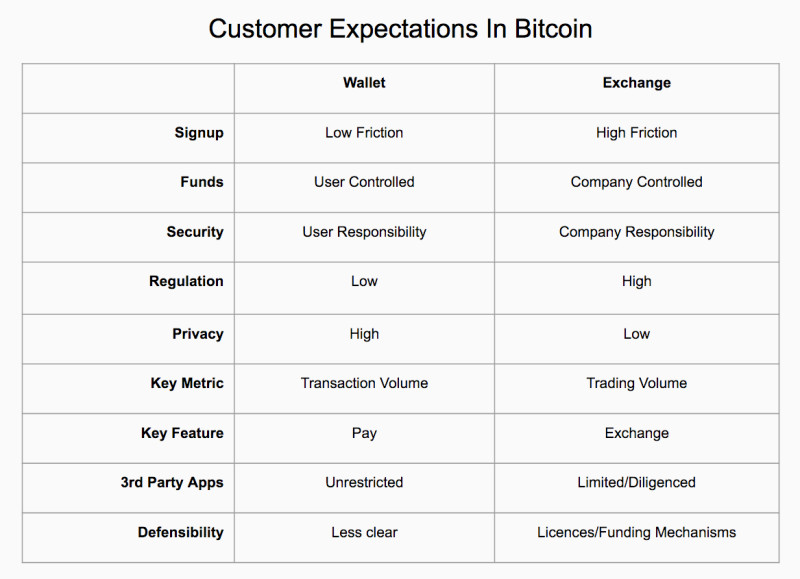
Here's something important to understand: a cryptocurrency network may be decentralized while the services used to access it are run by centralized companies. When you buy crypto through an exchange, you generally rely on that exchange for account access, trading, and custody unless you withdraw to a wallet you control. This distinction matters when evaluating claims that blockchain itself is decentralized or secure.
Blockchain security does not remove the separate risks associated with exchanges, wallets, passwords, devices, and user behavior.
Cryptocurrencies are created through different mechanisms. Some use mining to introduce new coins. Some networks cap the maximum supply while others have continuing emissions. Bitcoin has a maximum supply of 21 million coins, which makes it capped and, as some describe it, inflation-proof. Ethereum has an annual cap. Other coins like Litecoin have limited quantity while Dogecoin can have infinite supply. Scarcity is not a uniform feature of every cryptocurrency.
Why People Consider Crypto in the First Place
There are several reasons investors look at this space. Prices can rise sharply when demand increases faster than available supply, especially with tokens that have limited supplies. More than 10,000 cryptocurrencies were on the market as of a 2024 guide, each with distinct technology, supply characteristics, adoption levels, and risk profiles.
Learning how to invest in crypto coins often starts with understanding accessibility. You can purchase crypto in small dollar amounts, which makes it available to people who can't afford real estate or other investments with higher minimums. This is a meaningful advantage for investors with limited funds.
Markets operate 24 hours a day, seven days a week, including weekends. You don't have to wait for the New York Stock Exchange or Nasdaq to open. Crypto can also be bought with one cryptocurrency and sold for another, whereas conventional stock purchases use fiat currencies like the U.S. dollar.
Crypto generally creates fewer ongoing liabilities than real estate with its property taxes and insurance, or traditional stocks and bonds with annual brokerage fees. The main crypto-related costs tend to be the initial exchange fee at purchase and capital gains tax at sale. But cryptocurrency does not inherently produce dividends, rental income, or bond interest. You realize a gain when you sell for more than you paid.
Stated advantages of cryptocurrency
- Potentially high returns
- Decentralization
- Public transaction transparency
- 24/7 trading
- Access with small amounts of money
- Fewer ongoing asset expenses
A smartphone and internet connection may be enough to access a crypto service in some jurisdictions. This has potential to provide financial services to unbanked and underbanked populations. Crypto is not tied to one national currency or economy, and its price may reflect global demand. Some argue this global structure could help crypto avoid being directly shaped by the inflation of any one national currency, though capped supply only controls inflation at the token level and doesn't guarantee prices won't decline sharply.
The Real Risks You Need to Know
Cryptocurrency is primarily a speculative asset for many investors. Nearly any token can rise rapidly and then collapse. A novice investor may have difficulty anticipating these movements. Drops of 50% can occur within a year, and declines of 90% to 99% are not uncommon when a cryptocurrency falls out of favor.
A cryptocurrency can lose most or all of its value over a short period, and a recovery from a large loss can be difficult.
There's no reliable logic for assigning an objective value to a cryptocurrency. It's not tied to a business, stock, currency, or economic metric the way conventional investments are. Value can change dramatically without a corresponding change in a company's sales, profits, dividends, or productive assets. Some trading approaches are based on momentum and "animal spirits" rather than value-style analysis.
Trust creates vulnerabilities. Crypto is intangible, and transparency regarding ownership of many cryptocurrencies and exchanges may be limited. This opacity creates significant moral hazard, particularly because the asset class is lightly regulated and completely intangible. A crypto asset has no underlying physical property comparable to real estate, a business, or a government bond. If confidence in a token, exchange, or network falls, the price can deflate. A failed exchange may have few real assets available to repay customers.
Principal risks and limitations
- Extreme volatility and speculative pricing
- Lack of conventional valuation measures
- Trust, bubbles, and exchange risk
- No guaranteed liquidity
- Learning curve and technology risk
- Regulatory uncertainty
- Security losses
You may be unable to sell a token when needed if buyers have disappeared. Market capitalization, exchange listings, and investor demand all affect the ease of converting a token back into fiat currency. A token with a high nominal price is not necessarily more liquid than a lower-priced token. Ability to exit matters as much as the quoted price.
Beginners may need time to understand tokens, wallets, private keys, exchanges, blockchain, mining, and other terminology. Investing in an asset you don't understand adds another layer of risk. Some networks also face scalability limitations. Bitcoin's transaction processing slows once the network exceeds seven transactions per second, compared to Visa's reported ability to process about 1,700 transactions per second.
Regulatory treatment varies among countries and jurisdictions and is still developing. Crypto assets may be lightly regulated in one jurisdiction, prohibited in another, or accepted as legal tender elsewhere. Platform regulation does not necessarily mean the underlying token is regulated the same way. In the United States, crypto is characterized as a commodity-like asset rather than government-backed currency. El Salvador is an exception where Bitcoin has legal-tender status.
Private keys, passwords, and exchange accounts can be compromised. A complete loss is possible at any time from market declines, data loss, or password loss. These operational risks are separate from the token's underlying technology.

How Crypto Compares to Stocks
Both can be volatile, both can be traded through online platforms, and both can rise or fall based on investor behavior. But they differ in what you actually own, how asset value connects to economic activity, the degree of regulation, and the trading process.
A stock is a share of a publicly traded company and represents fractional ownership in that business. Shareholders may receive dividends, vote on corporate matters, and benefit if the company's value increases. Public companies are regulated by entities like the Securities and Exchange Commission and must disclose financial information. A stock's value connects to the health of the company and the tangible goods or services it produces.
A cryptocurrency is a fully digital blockchain asset. Owning a token usually does not grant ownership in an organization, a claim on its assets, dividends, or voting rights. Tokens come in several forms: utility tokens support goods or services in a blockchain ecosystem, security tokens can have rights similar to stocks, stablecoins track a more stable asset like the U.S. dollar, and meme coins may have little utility beyond community demand and trading.
Most crypto is not backed by a physical asset. Stablecoins are presented as an exception, although the stability and backing of any particular stablecoin must be evaluated separately.
Stocks trade during weekday market hours while crypto trades 24/7, 365 days a year. Stocks are generally purchased with fiat currencies, while crypto can be purchased with fiat or by exchanging one cryptocurrency for another. Stocks and bonds typically require at least a bank account and may require a brokerage account. Crypto enthusiasts may have more ways to buy and sell without traditional banking, though actual access depends on the platform.
Neither asset class is inherently easy. Both require research, analysis, and patience. Stocks have longer histories and more established methods for evaluating companies. Crypto is newer but has produced significant returns for some investors and introduced new methods of trading and settlement.
Picking a Cryptocurrency - Established vs New
There is no single cryptocurrency that's substantially better for every investor. The appropriate choice depends on risk tolerance, intended use, time horizon, liquidity needs, and whether you want financial returns, payment functionality, social impact, environmental considerations, or exposure to a particular technology.
Many guides point to Bitcoin or Ethereum as the best cryptocurrency for beginners because they have a track record and demand among traders. They may not rise as quickly as obscure altcoins, but they're generally easier to sell when you urgently need a buyer. Higher market capitalization usually corresponds to lower risk. Bitcoin and Ethereum are described as the only major success stories in the asset class and the assets least likely to fail because of their worldwide user bases and relatively widespread acceptance.
N26 suggests Bitcoin as one simple starting choice because it's the original cryptocurrency with the largest information base. It's capped at 21 million coins, widely accepted for payments, and capable of producing significant returns. But it has a seven-transactions-per-second scalability problem and high visibility to hackers and scammers.
If you're wondering about the best crypto to invest into beyond the big two, altcoins may be cheaper, offer faster gains, and represent newer technology. But they can also have low trading demand, limited liquidity, unknown teams, incomplete code, or no practical use. A token may be easier to buy than to sell.
Factors to evaluate before purchasing
- Growth potential: Is the asset widely adopted and accepted?
- Use case: Does the coin support an ecosystem or real-world service?
- Project research: Who developed it and what have they done before?
- Supply: How many tokens circulate, are more being issued?
- Liquidity: Can the coin be bought and sold quickly?
- Adoption: Is the project gaining users and developers?
- Security history: Have the network or platform experienced exploits?
- Team transparency: Are team members identifiable and active?
- Code development: Is the public code repository updated regularly?
- Regulation: Is the platform subject to identifiable rules?
- Custody: Can the asset be withdrawn to a wallet you control?
There are divergent views on holding and selling. Some characterize crypto as primarily a short- to medium-term momentum trade, using simple moving averages to identify trends. Others recommend buying and holding a small basket of established, large-market-cap cryptocurrencies. The conflict between long-term buy-and-hold approaches and momentum-based speculation is not resolved in the source material.
Figuring out cryptocurrency what to invest in means deciding which approach matches your situation. One reader argued that market timing can damage returns and that Bitcoin had remained the leading cryptocurrency while thousands of other tokens disappeared. Another invoked the rule against repeatedly trying to time the market.
How to Spot Scams and Bad Deals
There is no free lunch in cryptocurrency. Offers of guaranteed or exceptionally large returns should be examined for the mechanism producing the profit and for the possibility that the offer is a Ponzi scheme.
PlusToken promised returns of 10% to 30% per month. More than 3 million people reportedly participated. The platform was worth $17 billion at its peak in spring 2019. Early investors received some promised returns, but the operation was later identified as a Ponzi scheme. Most of the money disappeared.
XtraderFX used trusted figures from television and finance to advertise its services before being closed down in the United Kingdom. Recognizable names in promotional material do not prove a crypto platform is legitimate.
Warning signs from the security guide
- Project leaders with no previous traceable history in crypto-related news
- Team members represented by actors or people using unfamiliar names
- Guaranteed profit claims
- Promises of unusually large or consistent returns
- A code repository on GitHub that is rarely or never updated
- Pressure to send money quickly
- Requests to deposit money before receiving tokens or withdrawals
- Offers of free coins from celebrities or social media accounts
- A platform that cannot explain how it earns revenue
- A token with no identified use, development activity, or credible team
- High fees or withdrawal conditions hidden until after funds are deposited
A legitimate organization can still have a compromised account, and a celebrity may promote a fraudulent token. A free-coin offer should be treated as a likely scam unless the transfer can be independently verified through an official channel.
In mid-2020, attackers compromised the Twitter accounts of Elon Musk, Bill Gates, Kanye West, and other public figures. The compromised accounts promised to double coins sent by users. The attackers accumulated more than $100,000 in a few hours.
Whether and How Much to Invest
Different sources present different allocation ranges. These are opinions from different authors rather than a combined rule.
One perspective says a person only dabbling should keep crypto to a few hundred or a few thousand dollars and well below 5% of the portfolio. Someone who believes in crypto as a long-term asset class may allocate 5% to 25%, but not more than 25% in any single asset class. Many physicians buy crypto but usually treat it as speculation involving a small part of their portfolios.
Another framework classifies crypto with real estate and precious metals as an alternative asset. Alternative investments should collectively make up about 10% of the portfolio, while crypto should represent only 1% to 2% of the total. This author describes crypto as gambling and says it should never receive money the investor cannot afford to lose.
Before investing in crypto or an individual stock, the recommendation is to build an emergency fund, maximize employer retirement matches, maximize Roth IRA contributions, fund short- and medium-term goals, and direct remaining money into a taxable brokerage account before putting it into cryptocurrency.
If you're asking how to start crypto investment , a February 2025 post states that crypto's weaknesses as an asset class outweigh its potential upside and the author would not advise people to buy it. If an investor speculates despite that view, the recommendation is limiting speculation to Bitcoin and Ethereum rather than obscure coins, with due diligence and attention to individual risk tolerance.
Where to Buy - Exchanges and Apps
A cryptocurrency exchange, also called a digital currency exchange, is an online service where you can purchase, sell, or trade crypto. Payment methods can include bank transfers, debit cards, credit cards, balances held by another payment company, or other cryptocurrencies.
For many, the easiest way to invest in crypto is through a platform they already use. Coinbase was described as the largest exchange available to U.S. residents, about one-quarter the size of Binance and roughly equal to the next three exchanges combined. Regular Coinbase fees ranged from 0.5% to 3.99% per trade, considered high compared with Vanguard or Fidelity. Coinbase Pro offered lower fees, usually no higher than 0.5%.
Robinhood offered crypto trading without a separate trade fee, making money through order routing. It listed 16 tradeable cryptocurrencies, though Nevada and Hawaii residents were not eligible. An important custody distinction: Robinhood and Webull did not allow users to transfer crypto off the platform, including to a cold wallet. "Not your keys, not your coins."
Webull didn't technically charge a separate trading fee but included a 1% markup on the price of the currency with a $1 minimum, listing 20 tradeable cryptocurrencies.
PayPal allowed users to buy crypto through an existing PayPal account with fees of 1.5% to 2.3% and four available cryptocurrencies: Bitcoin, Bitcoin Cash, Ethereum, and Litecoin. The main advantage is convenience for someone who already uses PayPal. Venmo offered a similar selection and fee structure.
Common funding methods
- Linking a bank account and making a transfer
- Debit cards
- Credit cards
- Other cryptocurrencies
- Payment service balances
Platform account applications may request a name, address, email, government identification, and proof of address. Requirements depend on the platform and jurisdiction.
Picking an Exchange That Won't Burn You
Before using a platform, compare several security and operational details.
Security controls to look for: encryption, two-factor authentication, withdrawal confirmation, cold storage for some customer assets, device and login monitoring, account locks triggered by unusual activity, and know-your-customer and identity-verification procedures. Check whether the platform has operated for a reasonable period, has a recognizable reputation, and whether independent reviews or news reports describe security failures. Cold storage, customer-service quality, and the platform's response to previous incidents are also relevant.
Fees vary widely. A platform may charge a flat fee per trade, a percentage of transaction value, a bid-ask spread, deposit or withdrawal fees, minimum withdrawal amounts, minimum account balances, a markup embedded in the displayed price, or additional fees for converting or transferring assets. Popular cryptocurrencies may have lower fees than less widely adopted assets, but fee structures vary by platform and token. A low purchase fee can be offset by withdrawal, conversion, or spread costs.
The platform should support the token you're considering. A large exchange may list Bitcoin, Ethereum, and other major coins, while a smaller platform may offer only a limited selection. Availability does not establish that a token is legitimate or safe.
Crypto assets may be lightly regulated even when the exchange is subject to financial rules. A regulated platform may provide clearer customer protections, but regulation does not eliminate market losses, custody failures, or cyberattacks. Identify the relevant company name, legal jurisdiction, and complaint history before depositing funds.
Wallets, Keys, and Keeping Your Coins Safe
Cryptocurrency resembles the Wild West because one successful decision can produce gains of several hundred percent, while a poor decision can lose everything in a day.
Hot and warm wallets are software-based and remain connected to the internet. They make transfers fast and convenient, but their constant connection increases exposure to malware, phishing, and exchange attacks. If a hot wallet is used, two-factor authentication should be enabled. An authenticator app or another non-SMS method is preferable to text-message codes because SIM cloning can allow an attacker to intercept a code. One investor lost more than $70,000 after an account compromise.
Cold wallets are standalone devices resembling a flash drive or keychain. Popular models cost approximately $50 to $200. Keeping the private key on a device outside the internet reduces the opportunity for an online attacker to steal it. But a cold wallet doesn't remove every risk. The device can be lost, damaged, improperly configured, or infected before being disconnected. Recovery phrases and access instructions also need to be stored securely.
Exchanges commonly provide users with a hot wallet. The recommendation is using the exchange-held balance only for near-term transactions and moving most assets into a separately controlled cold wallet.
Wallet developers may display a password, private key, or recovery phrase only once. Store this information securely. A password manager is described as safer than an unprotected piece of paper, though a paper record can work if kept somewhere that cannot be accidentally discarded, overwritten, stolen, or accessed by children. A private key or recovery phrase should not be photographed, uploaded to an online service, entered into a website, or shared with another person. If the information is lost and no valid backup exists, the assets may be unrecoverable.
Phishing messages may imitate an exchange, wallet provider, social network, or public figure. A message promising free coins or requiring a deposit should be treated as a likely scam. Links should be verified independently rather than opened from an unsolicited message.
A secure home network is safer than public Wi-Fi for cryptocurrency transactions. On a public network, attackers may attempt to intercept information or spoof a legitimate website. Change the default password on your home router to a unique password. Factory passwords can be identical across many routers of the same model, allowing automated brute-force attacks. Keep router firmware and connected devices updated.
When learning how to get started investing in crypto , consider conducting transactions through an encrypted VPN connection. Connection speed and kill-switch functionality are important. A kill switch automatically disconnects the device from the internet if the secure connection drops, preventing information from being sent without encryption. Reliable security software should run on every device used for trading.
The large amount of money circulating in crypto attracts cybercriminals. Cryptocurrency-specific malware designed to steal wallet keys is common. A reliable antivirus or endpoint-security product should run on computers and phones used to access crypto accounts.
Retirement Accounts and Crypto
Cryptocurrency can be held in a self-directed IRA (SDIRA). A traditional or Roth SDIRA can combine a tax-advantaged retirement structure with a cryptocurrency investment strategy.
Retirement-account crypto can be purchased through a self-directed IRA or 401(k). Access may be structured through an LLC (sometimes called a checkbook IRA or checkbook 401(k)) or through a partnership between a retirement provider and an exchange like Gemini. The investor buys the cryptocurrency directly rather than owning shares in a fund. Account and provider fees vary.
In 2022, Fidelity announced plans to make Bitcoin available within its 401(k) plans with allocation up to 20% of plan assets. This drew objections that workers who hadn't maximized conventional retirement contributions might be encouraged to add crypto first.
A standard brokerage window may permit crypto-themed funds even when the account is not self-directed. Examples include PCRA at Schwab and BrokerageLink at Fidelity. Several funds and trusts exist: BITO and BTF generally invest in Bitcoin futures, GBTC is a closed-end trust, spot Bitcoin ETFs were approved in January 2024 allowing products from firms like BlackRock or Fidelity, BLOK invests in crypto-related companies rather than digital assets directly, and BITW invests in the top 10 cryptocurrencies.
Types of crypto exposure in retirement accounts
- Direct crypto through SDIRA or checkbook IRA LLC
- Futures-based ETFs like BITO and BTF
- Spot Bitcoin ETFs
- Closed-end trusts like GBTC
- Crypto-equity ETFs like BLOK, BLCN, LEGR
- Diversified trusts like BITW
The Entrust Group describes an indirect digital currency fund as similar to a mutual fund. Instead of holding a wallet or crypto directly, the fund may invest in companies that hold coins or provide cryptocurrency-related services. The process involves opening the SDIRA, funding it, reviewing and signing the investment sponsor's agreement, and submitting a Buy Direction Letter.
A second option establishes an LLC to hold or acquire cryptocurrency. The SDIRA treats the LLC as the account asset. An LLC may provide liability protection and checkbook control but costs money to establish and maintain. The LLC itself does not remove crypto's price, security, liquidity, or regulatory risks.
The SDIRA does not remove the underlying risk of owning crypto. It changes the account structure and potentially the tax treatment of contributions, gains, and distributions.
Doing Your Homework Before You Start
Digital assets, regulation, and financial technology change rapidly. The Library of Congress recommends using current research resources including their Fintech Research Guide with links to federal regulatory agencies, industry associations, subscription databases, print resources, the Congressional Research Service, other government sources, primary explanations of blockchain and digital assets, and proposed cryptocurrency legislation.
Before you figure out how to invest cryptocurrency , review market history and legal or regulatory developments before opening an account. Due diligence is required for conventional assets too. A stock, real estate purchase, certificate of deposit, or cryptocurrency should be evaluated according to its issuer, liquidity, fee structure, custody arrangements, and risk rather than treated as safe solely because of its technology or popularity.
Approaching crypto currency investing with a clear head means understanding that past performance is not an indicator or guarantee of future performance. The source material's financial disclaimer states this explicitly. Historical snapshots of returns from specific dates are just that - historical snapshots, not current returns or forecasts.
Take time to define unfamiliar terms, identify who regulates a token or platform, review proposed legislation, and distinguish an established project from a promotional claim. The learning curve is real, but skipping it is how people lose money they can't afford to lose.








Comments on “Investing in Cryptocurrency: Where to Start and What to Watch For”
No comments yet. Be the first to share your thoughts.