

Bitcoin Selloff Shakes Market Confidence
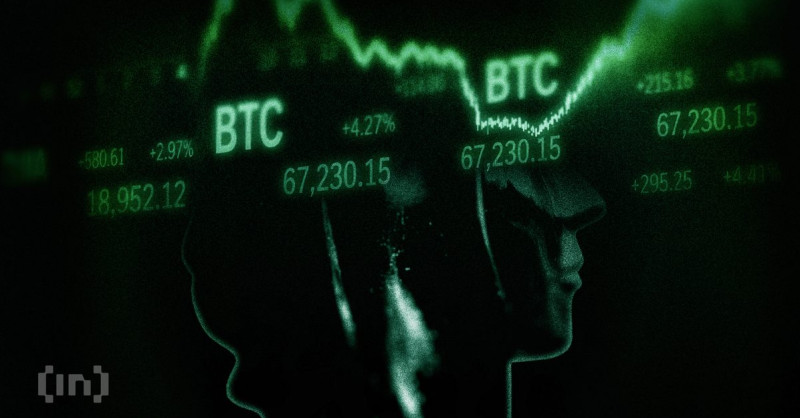
I watched the charts turn red in early June when Bitcoin dropped below sixty-seven thousand. The selling started after Strategy disclosed it had sold thirty-two Bitcoin - the first sale after years of saying they would never sell. That news hit hard. By the U.S. afternoon session Bitcoin touched sixty-six thousand three hundred, its steepest one-day drop since February. If you were asking what just happened to crypto that week, the answer was a cascade of forced selling and shifting sentiment.

Leverage and Liquidations Pile Up
The numbers tell a brutal story. More than seven hundred sixty-six million got wiped out in long positions during the European session alone. By the end of the day total liquidations topped one point three billion across derivatives markets. Bitcoin accounted for over seven hundred million of that. Daily trading volume jumped to over one hundred twenty billion, up from eighty-eight billion the day before. Traders were selling in anticipation of a deeper drop. The Fear & Greed Index sat at twenty-three - extreme fear territory. Historically readings like this have marked major buying opportunities, but the report noted the current macro mix could be unusual for crypto.
With outside capital reluctant to enter and existing holders trimming exposure, we may be in for a choppy summer.
That line from K33 head of research Vetle Lunde stuck with me. It captures the mood perfectly.
ETF Outflows Signal Institutional Retreat
BlackRock's IBIT alone saw four hundred forty million exit in a single day. Total Bitcoin ETF outflows topped four hundred eighty million while Ethereum ETFs lost forty-four million. The funds were on a ten-day losing streak with over three billion leaving roughly a dozen products. K33 tracked nearly sixty-three thousand BTC of ETF outflows over three weeks - the second-largest streak on record. Selling accelerated as Bitcoin failed to reclaim its two-hundred-day moving average while the Nasdaq and S&P five hundred kept hitting new highs. Some market participants viewed the repeated outflows as a factor weighing on the broader market.
Key ETF outflow data points
- BlackRock IBIT: four hundred forty million in one day
- Total Bitcoin ETF outflows: over four hundred eighty million daily
- Ethereum ETF outflows: forty-four million
- Ten-day losing streak across roughly a dozen funds
- Over three billion total outflows during the streak
- Nearly sixty-three thousand BTC over three weeks per K33
Capital Rotates Toward AI and Ex-Miners
Money wasn't just leaving crypto - it was rotating. Investors favored AI-related stocks, anticipated SpaceX and Anthropic IPOs, and other opportunities outside digital assets. Alphabet announced an eighty billion stock sale to fund AI infrastructure. Meanwhile former Bitcoin miners TerraWulf, Cipher Digital, and Hut 8 hit new one-year highs, each up roughly seven hundred percent over the preceding year. These stocks decoupled from Bitcoin's price action. Investors valued their power infrastructure and data-center assets for AI computing demand. Marvel Technology jumped eighteen percent after Nvidia's CEO said it could become the next trillion-dollar company. This rotation helps explain what makes crypto go up - or in this case, what pulls capital away.
Strategy's Bitcoin Sale and Preferred Stock Pressure
Strategy's thirty-two Bitcoin sale was worth over two point two million at prevailing prices. The company framed it as support for its STRC preferred stock dividend commitment. Investors didn't buy the explanation. STRC fell to ninety-six dollars forty-eight cents - its weakest level since Bitcoin hit sixty thousand in February. Arca CIO Jeff Dorman put it bluntly: this is the first time MSTR, BTC, and STRC holders are really in a bind. Someone loses badly in the next four months. Strategy shares dropped nearly four percent in premarket and later joined a group of crypto-related stocks down eight to ten percent.
This is the first time that MSTR, BTC and STRC holders are really in bind. Someone is going to lose badly here, and it will happen in the next 4 months.
Not Everyone Is Selling - Strive Keeps Buying
Strive, led by Matt Cole, went the other way. They acquired twenty-five hundred Bitcoin for one hundred eighty-five point two million - an average cost of seventy-four thousand ninety-two per coin. The purchase brought their total holdings to nineteen thousand Bitcoin valued around one point three billion. They raised the money through common-stock and SATA preferred-stock sales. Strive shares still fell over four percent in premarket as Bitcoin dropped below sixty-nine thousand. It shows conviction doesn't protect you from short-term mark-to-market pain.
SpaceX IPO Rumors Add Another Layer
A live update mentioned SpaceX considering an IPO with confusing valuation figures - the headline said one point seven five trillion while the body said one point seven five billion. Other reports circulated a two trillion figure. SpaceX reportedly planned to sell less than five percent of shares, raising sixty to eighty billion. The IPO was set for June twelfth on Nasdaq. SpaceX held nearly nineteen thousand Bitcoin on its balance sheet worth about one point two five billion when Bitcoin traded around sixty-seven thousand. That's a meaningful corporate treasury position regardless of the IPO valuation confusion.
Toncoin Plans Rebrand to Gram
The Open Network announced it would rename Toncoin back to its original name Gram with ticker GRAM. Founder Pavel Durov said the rebrand would pave the way for the next stage. The transition was expected to take around three weeks with anticipated volatility for TON during that period. Gram was the token name in TON's twenty eighteen whitepaper. Telegram abandoned it after the SEC blocked their one point seven billion ICO in twenty twenty. Telegram effectively took over from the TON Foundation in May as the network's main driver and largest validator. Traders should watch for sei crypto price prediction style volatility during the swap.
Quantum Threat Timeline Moves Closer
A security report examined warnings from Justin Drake of the Ethereum Foundation and Charles Guillemet, CTO at Ledger, about quantum computers breaking the math protecting Bitcoin and Ethereum sooner than expected. Recent advances and the public rediscovery of Google research forced a timeline rethink. On March thirty-one Google Quantum AI presented a method ten times faster than earlier approaches for breaking the cryptography. The new method was estimated to require fewer than twelve hundred logical qubits to break digital locks used for wallets, addresses, and most online authentication.
Outsiders Reconstruct Google's Hidden Method
Google didn't publish the actual quantum circuits. The research stayed behind secrecy for weeks. Then French researcher André Schrottenloher independently reconstructed the main optimization in two months. Craig Gidney noted a public challenge allowed hobbyists to test the result - within hours participants reportedly beat Google's original figure by more than eight percent. The zero-knowledge proof Google released - a mathematical method that confirms something works without showing how - had an unintended side effect. Because the proof was public, people could test candidate attacks against it and get immediate feedback. Guillemet said the ZKP was designed to hide the attack but actually published the reward function for rediscovering it. Hobbyists connected the verifier to automated AI searches. This process may have made existing Q-Day timeline estimates too generous.
Migration Deadlines Already Under Scrutiny
Drake estimated a fifty percent chance Q-Day arrives by twenty thirty-two and a ten percent chance by twenty thirty. He rejected the U.S. government's twenty thirty-five deadline as unrealistic - in plain language, with hindsight that date is a joke and should be discounted entirely. Ethereum, Google, and Cloudflare were working toward a post-quantum migration deadline of twenty twenty-nine. Drake leads work on Ethereum's quantum-resistant plan replacing current cryptography with hash-based cryptography. Neither expert called for immediate panic. Guillemet warned moving too quickly into untested replacement cryptography could be more damaging than the quantum threat itself. The position: plan for migration now rather than take immediate action. The gap between classified research and public knowledge keeps shrinking.
In plain language: with hindsight, that date is a joke and should be discounted entirely.
Wirex Builds Stablecoin Banking and Web3 Infrastructure
Wirex described services across personal banking, business accounts, cards, savings, travel, developer infrastructure, stablecoin settlement, and on-chain services. They serve over seven million users in more than one hundred thirty countries and have processed over twenty billion in transactions. Their personal services include online and in-store spending, cash withdrawals, transaction rewards, flexible and fixed savings, and travel offers. Wirex Private provides priority support and exclusive global-asset access for balances of one hundred thousand or more. The business platform focuses on stablecoin banking, corporate cards, global accounts, and on-chain yield. Their developer offering includes one API for stablecoin accounts, payments, and cards alongside stablecoin settlement and on-chain infrastructure.
Wirex service categories
- Personal banking with spending, withdrawals, rewards, savings
- Wirex Private for balances over one hundred thousand
- Business platform: stablecoin banking, corporate cards, global accounts
- Developer API for stablecoin accounts, payments, cards
- Stablecoin settlement and on-chain infrastructure
Visa Agentic Ready Programme and Wirex One
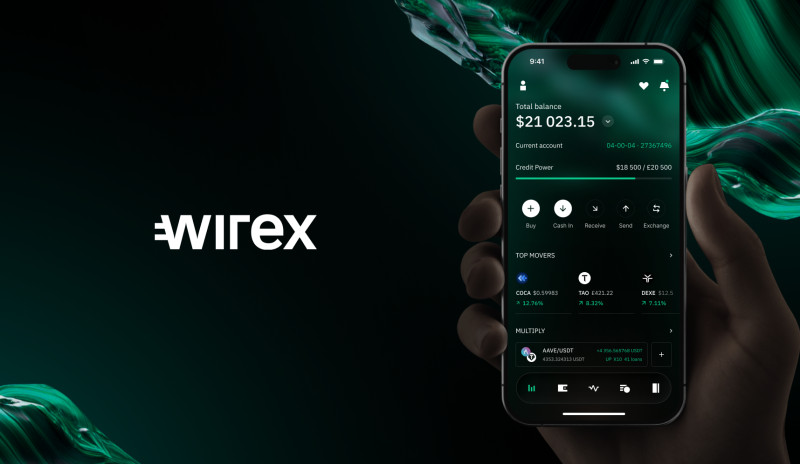
Wirex joined Visa's Agentic Ready programme as an issuer to support secure, scalable, agent-initiated payments using stablecoin rails. The post said the agentic economy was growing at forty-four percent per year. It contrasted stablecoin-based payment rails with traditional banking constraints including cut-off times, correspondent-banking delays, and human approval. Wirex One was presented as an upcoming stablecoin banking application intended to broaden access to private-banking-level features. Institutional investors and the ultra-wealthy had been able to earn five percent or more on cash for years while people with less than a million were locked out. Wirex One aims to change that with a single application for spending, earning, investing, and growing financial assets - entirely based on stablecoins.
Self-Custody and True Asset Ownership
Wirex One was described as fully on-chain, powered by stablecoins, designed to keep assets under user control. The post cited recent industry events as evidence of how access becomes fragile when users depend on a single custodial platform. It contrasted this with the non-custodial, user-control model. Wirex partnered with SecondFi, EMURGO's self-custodial neofinance platform, to launch a self-custodial card letting users spend directly from their own wallets while retaining full control. EMURGO is a co-founding entity of the Cardano blockchain. The partnership extended an earlier phase where EMURGO launched the Cardano Card with Wirex as issuer. This focus on self-custody matters more as people ask cryptocurrency news today and wonder who really holds their keys.
Payment Security Basics Still Matter
Wirex also published practical guides on payment security. Posts covered seven common payment errors and their causes, seven checks before sending money, detecting suspicious financial activity using behavioral analysis, risk scoring, device fingerprinting, and anti-money-laundering checks. Other posts listed reasons a card might not work - insufficient balances, account limits, security checks, payment settings - and reasons for declined card payments including insufficient funds, security checks, and account limits. They also covered factors affecting transaction speed: payment method, banks, and currency conversion. Recognizing legitimate payment requests and avoiding scams got its own post with checks for sender details, payment reasons, and common fraud warning signs. Reading transaction history to spot spending trends and track expenses rounded out the practical content.
Payment security topics covered
- Seven common payment errors and causes
- Seven checks before sending money
- Detecting suspicious activity: behavioral analysis, risk scoring, device fingerprinting, AML
- Reasons a card might not work
- Reasons for declined card payments
- Factors affecting transaction speed
- Recognizing legitimate requests and avoiding scams
- Reading transaction history and tracking expenses
European Regulation and Distributed Ledger Trading
SIX described MiCA as the European Union's first uniform regulation for crypto-assets, saying greater legal certainty could reduce risks for investors. Investment service providers would face new tasks and need to prepare. On distributed-ledger technology, SIX said it changes how assets are traded - settlement can be accelerated and trust created in a decentralized way. Smart contracts and tokenization were identified as sources of potential advantages. They also addressed expanding terminology: crypto, coin, token - covering what a token is and different token types. DeFi and DApps were described as entering everyday language, focusing on what those terms mean and how they change the financial system. These regulatory and infrastructure pieces form the backdrop for any crypto news predictions you'll read.
NFT Experiments and Early Institutional Adoption
SIX ran a self-experiment in early twenty twenty-two: could a person buy an NFT for one hundred Swiss francs or less? The first attempt on Ethereum failed due to high fees. The second part moved to Solana with the same objective. On exchanges, Peter T. Golder wrote about four digital-asset trends likely to shape future exchanges and five building blocks exchanges would need. Andréa M. Maechler of the Swiss National Bank discussed implications of new technologies for Swiss financial-market infrastructure, citing Project Helvetia examining central-bank money in tokenized asset transactions. An article from twenty twenty described that year as dominated by volatility and uncertainty with VIX stabilizing and public equities experiencing significant swings partly due to COVID. Aggressive central-bank measures left interest rates at historically low levels. Kevin Abosch and artist Juan Dominguez examined how tokenization could affect the art market including non-bankable assets like real estate and paintings.
Blockchain technology enables digitized assets to be traded and this category can include non-bankable assets such as real estate and paintings.
What This Means for Your Watchlist
The June selloff showed how fragile sentiment gets when leverage unwinds and institutional flows reverse. ETF outflows, Strategy's sale, AI capital rotation, and quantum timeline shifts all pointed the same direction - risk off. But Strive kept buying, SpaceX holds Bitcoin, and Wirex keeps building stablecoin rails. The Fear & Greed Index at extreme fear has historically marked opportunity. Quantum migration planning is underway without panic. MiCA brings regulatory clarity to Europe. Self-custody tools are shipping. If you're scanning a list of crypto coin projects or checking top 15 cryptocurrencies for entries, remember: the noise is loud but the signal is in the structure. Watch the ETF flows. Watch the leverage. Watch who's building through the chop.
No one rings a bell at the bottom. But the pieces on the board - institutional adoption, regulatory frameworks, quantum-resistant roadmaps, stablecoin infrastructure, self-custody options - suggest the game isn't over. It's just moving to a different table.











Comments on “Crypto Coin News: A Clear Look at Bitcoin, Web3 and Security”
No comments yet. Be the first to share your thoughts.