
What Crypto Currency Investing Means
Crypto currency investing means putting money into digital assets that run on blockchain technology. The main question is simple: what are you buying, and can you handle the risk? This guide breaks down the basics so you can decide for yourself.
Crypto investing isn't one simple bet. There are different ways to approach it, and you may see it as a currency, an asset, or a commodity. Do your research, then choose based on how much risk you can handle. Cryptocurrency what to invest in? That's the question this guide tries to answer.
What Cryptocurrency Actually Is
Cryptocurrency is a decentralized, peer-to-peer digital asset that runs on blockchain technology without requiring a bank or payment processor to audit transactions. Blockchains maintain a continuing, verifiable record of transactions between peers using public-key cryptography.
The networks operate on computers running free and open-source software that enforce accounting rules. They are not issued or controlled by a traditional financial system such as a government or central bank. Brooklyn Coop defines cryptocurrency as a network-based digital currency that is not reliant on any central authority to uphold or maintain it.
How Bitcoin Started
Bitcoin launched in 2009 and was the first cryptocurrency. At the time of the M1 Finance article, Bitcoin had become the largest blockchain-based digital currency, with a market capitalization of more than $740 billion. Hundreds of other cryptocurrencies, including Ethereum and Litecoin, had attracted early adopters and mainstream investors.
Meme coins, which are created around a pop culture reference or internet joke, such as Dogecoin, had also attracted media attention and dedicated fans. Bitcoin is the original cryptocurrency, and Brooklyn Coop identifies Bitcoin and Ethereum as the two major success stories of the cryptocurrency market. Their survival and popularity are attributed to network effects involving millions of people investing substantial sums of conventional money, and to design features such as built-in scarcity, blockchain technology, and secure transactions.
"that is not reliant on any central authority, such as a government or bank, to uphold or maintain it"

Currency, Asset, or Collectible?
A valuation framework described by Aswath Damodaran separates investments into four categories: cash-generating assets, commodities, currencies, and collectibles. The distinction is based on whether an item produces cash flows, has a practical use as raw material, functions as money, or derives value from scarcity and desirability.
Four investment categories
- Cash-generating assets produce future cash flows, like businesses, bonds, or stocks.
- Commodities derive value from use as raw material, like energy or food.
- Currencies are mediums of exchange but don't produce cash flows on their own.
- Collectibles have aesthetic or emotional value but no cash flow, like art or baseball cards.
Gold is not a cash-generating asset. Damodaran argues that gold is more accurately viewed as a currency or store of value than as a commodity, because its value is connected less to industrial utility and more to its historical role during crises or periods of lost confidence in paper currencies. Real estate is an asset even when it is a personal home because, in the absence of ownership, the owner would have had to pay rental expenses.
Why Bitcoin's Classification Is Disputed
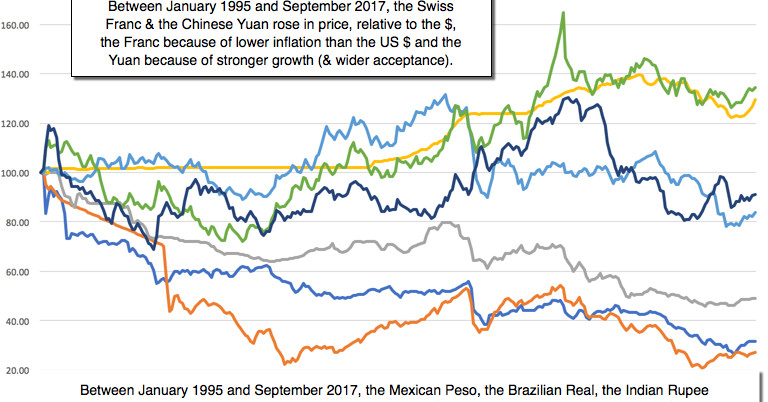
Damodaran argues that Bitcoin is not an asset because it does not generate cash flows for its holder. He also argues that it is not a commodity because it is not raw material used to produce something useful. He identifies a possible exception if Bitcoin becomes a necessary component of smart contracts, which could give it a commodity-like role. He associates that possibility more directly with Ethereum, which has been marketed as a smart-contract platform.
After separating assets and commodities, Damodaran places Bitcoin between a currency and a collectible. He considers Bitcoin a currency, but not yet a good one, because its acceptance as a medium of exchange remains limited and its volatility limits its ability to function as a store of value. Supporters tend to view it as a currency, while detractors tend to view it as a collectible.
Three possible long-term paths for Bitcoin
- The global digital currency: Bitcoin gains wide acceptance for transactions worldwide and becomes a widely used global digital currency. To reach this outcome, it would need to become more stable relative to other currencies, governments and central banks would need to accept it or avoid actively preventing its use, and the mystery surrounding it would need to diminish.
- Gold for Millennials: Bitcoin becomes a haven for people who do not trust central banks, governments, or fiat currencies. It takes on a role similar to the role gold has played for people who lose confidence in centralized monetary systems.
- The twenty-first-century tulip bulb: Bitcoin becomes a speculative shooting star that attracts money as it rises because traders see an opportunity for easy profits, then collapses when participants move to another asset or design.
Damodaran states that he does not know which path will occur and that all three remain plausible. Short-term traders may focus on minutes or hours and may not care which long-term path unfolds. People with a longer horizon should focus less on daily price movements and more on Bitcoin's development as a currency. It is also possible to be pessimistic about Bitcoin while remaining optimistic about blockchain technology and its potential for disruption.
Arguments That Bitcoin Has Value
Reader and commenter arguments challenge the idea that Bitcoin cannot be valued merely because it produces no cash flow. One argument is that the value of a currency can be defined through its purchasing power and its ability to buy goods, services, or other currencies. A fixed supply of Bitcoin has been compared with an "ethereal gold standard." This argument treats Bitcoin's scarcity and its potential to preserve purchasing power as a form of value even without earnings or dividends.
Another argument is that Bitcoin should be considered a commodity because mining requires measurable computing power and electricity. Critics of that view respond that the cost of production does not automatically make something a commodity. A commodity must have a use as raw material. In response, supporters say Bitcoin can be viewed as a money-transfer commodity because it can be used to move value across borders, particularly where capital controls exist.
Other arguments describe Bitcoin as a bearer asset. A holder can control Bitcoin through a private key and use it to meet debts or commitments. The comparison is made with cash and bonds, which are also largely ledger entries rather than physical objects. Supporters argue that Bitcoin can be transferred between hardware wallets and used as a form of property without requiring a conventional bank account.
A further argument is that Bitcoin's forks can create economic benefits for existing holders. A holder may receive new coins from a blockchain fork and be able to sell them for fiat money. This has been compared with the creation of options, although the classification remains disputed. Supporters also point to network utility. Remittances, payments, and microtransactions are described as possible markets for Bitcoin.
A currency can also be viewed as an option to purchase assets in the future. If a store accepts Bitcoin, a person who already owns Bitcoin avoids the cost of exchanging another currency.
Some supporters argue that the government or issuer should define a currency rather than the material or algorithm. They contend that paper money, plastic money, and other forms of money show that the issuer is more important than the physical substance. They also point to government or institutional interest in Bitcoin, including proposed strategic reserves, as evidence of future adoption.
Potential Rewards of Crypto Investing
Cryptocurrency can be purchased with a relatively small dollar amount. Brooklyn Coop notes that people who lack enough money to buy real estate may find crypto more accessible. This can make it appear attractive to people with lower incomes or limited investable assets.
Brooklyn Coop also argues that cryptocurrency enthusiasts do not need to be banked to buy or sell crypto. Stock and bond transactions, while also risky, require a bank account at minimum and often a brokerage account. Crypto exchanges may therefore provide access to people who do not use traditional banking services.
Investing cryptocurrency can provide exposure different from traditional stocks and bonds. Francis Bayes describes cryptocurrency as having a relatively weak correlation with stocks compared with the correlation between U.S. and international stocks. He therefore views a small allocation as a way to take advantage of volatility and diversification without allowing crypto to dominate the portfolio.
Proposed advantages of crypto
- Access with a small amount of money - crypto can be bought with relatively little capital.
- Global transfers without a traditional intermediary - value can move online without a bank.
- Fewer continuing liabilities - no property taxes or annual broker fees like real estate or stocks.
- Diversification and correlation - crypto may have weak correlation with stocks compared to US and international stocks.
Francis Bayes describes a benefit that is behavioral rather than financial. He says owning a small amount of crypto helped him keep a finger in the water during periods of excitement about technology stocks and crypto. It allowed him to experience the volatility without allowing fear of missing out to disrupt the rest of his financial plan. He calls himself "winning with crypto" because he followed his plan, not because crypto has materially changed his path to financial independence.
Risks, Failures, and Limitations
Crypto is consistently described as more volatile than traditional asset classes. Francis Bayes experienced Bitcoin falling from the $40,000s to below $20,000. It rose above $90,000 and surpassed $100,000 later. Bitcoin increased more than 120% in one year, but that increase followed severe declines and does not eliminate the possibility of another large loss.
M1 Finance lists volatility, limited long-term history, and weaker regulation of cryptocurrency exchanges as major disadvantages. Jordan Frey describes crypto as a high-risk asset and says that even ten years may be a short investment history for judging long-term trends. Nobody knows how to get rich from crypto. The goal is to understand what you're buying and accept that losses are part of the game.
Major risks to consider
- Volatility and large drawdowns - crypto can drop 50% or more in a year.
- Lack of cash flows - no dividends, interest, or rent like stocks, bonds, or real estate.
- Trust and intangible value - crypto has no tangible asset underneath it and depends on participants.
- Bubbles, collapses, and scams - widely publicized failures have happened alongside gains.
- Regulatory and political uncertainty - regulation can affect exchanges, taxation, and usage.
- No guaranteed ability to sell - there is no guarantee an investor will be able to sell during a collapse.
- Custody and security - exchange failure or lost private keys can mean total loss.
- Taxes and fees - capital gains tax at sale, exchange spreads, and network fees add up.
Brooklyn Coop says crypto has no tangible asset underneath it and depends on participants to maintain its value. If trust is lost for any reason, the value can deflate. Because ownership of many cryptocurrencies and exchanges is not fully transparent, the article describes a significant moral hazard. A failed exchange may have few real assets available to repay customers. The failure of an exchange can therefore create a loss even when the underlying cryptocurrency technology continues to function.
Influencer Advice and Short-Term Returns
Research from the Indiana University Kelley School of Business examined whether crypto-influencer tweets have long-term investment value. The study examined approximately 36,000 tweets from 180 prominent crypto social-media influencers. The tweets covered more than 1,600 crypto assets over a two-year period. The researchers used cryptocurrency lists and daily price data from CoinGecko, identified prominent influencer accounts through internet searches, and merged the account list with Twitter data.
The mean one-day return associated with crypto-influencer tweets was 1.83%. The mean two-day return was 1.57%. Returns began declining substantially as early as five days after the initial tweet. The mean return from day two through day five was negative 1.02%, meaning that more than half of the initial positive return had disappeared within five days. Average cumulative returns were negative 2.24% at 10 days and negative 6.53% at 30 days.

"The primary results of the paper indicate that crypto influencers' tweets are initially associated with positive returns, consistent with them getting investors' attention," but the initial gains were followed by negative longer-horizon returns. The pattern was consistent with pump-and-dump schemes, or at least suggested that the advice had little long-term investment value.
Ken Merkley said the pattern was consistent with pump-and-dump schemes, or at least suggested that the advice had little long-term investment value. Mark Piorkowski said post-event returns were more negative when an influencer described themselves as an expert and were even more negative for self-described experts with larger followings. He also said that the only way to profit from the advice might be to exit shortly after the initial tweet, a strategy that is often not viable.
"Overall, the evidence in our study suggests that investors should be cautious in following crypto-influencers' investment advice, as most gains dissipate soon after the tweets."
The research is particularly relevant to the scale of reported crypto scams. The FBI reported that Americans lost $5.6 billion to crypto scams, a 45% increase from the previous year. Some influencers may be chasing trends or promoting assets likely to generate visibility and followers without regard for future performance. The researchers used machine-learning methods to classify tweets. The negative post-tweet pattern was stronger when tweets had more positive sentiment or contained buy recommendations. This suggested that influencers were generally sending positive signals even though longer-term returns were negative.
Ways to Invest in Crypto
Direct investment generally means purchasing a crypto asset through an exchange or provider. Bitcoin is the oldest and most established example, while Ethereum, Litecoin, and many other coins are also available. Meme coins such as Dogecoin are driven by internet culture and can attract dedicated communities as well as speculative buying. If you want to invest crypto coin directly, the risks include volatility, exchange failure, loss of private keys, incorrect wallet procedures, scams, and the possibility that a coin will lose support or become obsolete.
The best crypto to invest in depends on your risk tolerance and knowledge. The Brooklyn Coop assessment favors Bitcoin and Ethereum over obscure assets if someone chooses to invest. A dollar-cost-averaging approach involves buying at recurring intervals or buying small amounts during declines rather than committing a large lump sum. Francis Bayes says he bought in small amounts during the crash because he feared prices could fall further.
Methods to get exposure to crypto
- Buying crypto directly - purchase through an exchange, use dollar-cost averaging, buy small amounts during declines.
- Futures-based cryptocurrency ETFs - ProShares Bitcoin Strategy ETF (BITO) holds cash-settled Bitcoin futures contracts.
- Spot Bitcoin ETFs - IBIT and FBTC provide exposure tied more directly to the underlying asset.
- Blockchain ETFs - BLOK, BITQ, LEGR, BKCH hold companies that develop or use blockchain technology.
- Cryptocurrency trusts - Grayscale trusts (GBTC, ETHE, LTCN) provide crypto exposure in a trust structure.
- Mining companies - RIOT, MARA, BTBT, HUT operate data centers that process blockchain transactions.
- Public companies and exchanges - Tesla, Square, Coinbase hold or support crypto on their balance sheets.
- Self-directed retirement accounts - Equity Trust describes potential tax savings and portfolio diversification in a self-directed IRA.
M1 Finance describes the ProShares Bitcoin Strategy ETF as a way to obtain Bitcoin exposure through a listed exchange-traded product. Owning BITO does not mean owning Bitcoin itself. The investor receives derivative exposure to Bitcoin through futures contracts. Futures reflect expectations about future prices and can differ from the spot price of the underlying asset. M1 identifies the regulated exchange-traded product as an attractive access point for some investors. It also states that ProShares collected a 0.95% fee.
Paul's trend-following article states that trading crypto was not as easy as trading stocks until spot Bitcoin ETFs were introduced. The introduction of Bitcoin spot exchange-traded funds, including IBIT and FBTC, made crypto more accessible through many brokers. Some ask about trade crypto options, but Damodaran's framework focuses on price vs value rather than options strategies.
Portfolio Allocation and Rebalancing
Francis Bayes uses a specific portfolio structure to demonstrate how crypto can be incorporated without allowing it to control the portfolio. His allocation is 98% stocks, all held in index funds, and 2% crypto. He says he selected 2% because a range of 1% to 5% can be a reasonable area for capturing some of crypto's volatility and relatively weak correlation with stocks. He says the difference between 1% and 2% has little effect on the total portfolio, while moving from 2% to 5% would add meaningful risk and emotional pressure.
He rebalances stocks annually using new contributions to retirement accounts. Crypto is handled more actively. He buys when crypto falls to 0.8 times the target allocation, or 1.6%, and sells when it reaches 1.25 times the target allocation, or 2.5%. Money from selling crypto is used to buy more stocks, while money used to buy crypto comes from checking-account cash. Francis keeps the plan in writing and uses a spreadsheet that changes the relevant cells to yellow when the allocation moves outside the target range.
Different allocation views from the sources
- M1 Finance says some experts suggest starting with 1% to 5%, while crypto enthusiasts suggest higher allocations.
- Jordan Frey states that he has exactly 0% of his portfolio in crypto and says the risk is not worth the potential reward.
- The White Coat Investor generally suggests that a person who strongly believes in Bitcoin might consider approximately 5%.
- A separate commenter suggested that people start between 2% and 10% depending on age, willingness to learn, and ability to tolerate volatility.
Francis's 2% example is therefore one personal allocation rather than a general rule. The sources also present a tension between maintaining a small allocation to prevent FOMO and allowing that allocation to become a larger part of the portfolio over time. Francis says the primary purpose of holding crypto is to avoid unnecessarily interrupting the compounding of the 98% stock portion of his portfolio. He quotes Charlie Munger's rule of "never interrupt compounding unnecessarily," while noting the irony that Munger also called crypto "rat poison."
Trading vs Investing
Damodaran's framework distinguishes investing from trading. For investing, every asset has a fair or true value that can be estimated, and price is expected to converge toward value eventually. For trading, the price is the number that can be acted on, and no one knows an asset's exact value.
Key differences between investing and trading
- Investing focuses on cash flows, growth, and risk; trading focuses on demand, supply, mood, and momentum.
- Investing uses ratio analysis and discounted cash-flow valuation; trading uses technical indicators and price charts.
- Investing has a long-term horizon; trading operates on minutes, weeks, or months.
- Investing requires patience and trusting markets; trading requires acting quickly and accepting losses.
Damodaran applies the distinction to Bitcoin. He says Bitcoin should be traded based on price, mood, momentum, and incremental information rather than valued like a cash-generating asset. He would not buy Bitcoin at $6,100 in 2017 because he did not view himself as a good trader, not because he had established that Bitcoin was overvalued. He acknowledges that a skilled trader could make or lose large amounts based on momentum calls.
This position conflicts with the view that Bitcoin can be a long-term investment based on scarcity, adoption, monetary debasement, or network growth. The conflict remains unresolved in the material. Some people look at Bitcoin and see a store of value; others see a speculative toy. Both views are present in the sources, and neither has been proven right.
Storage, Exchanges, and Implementation
An exchange provides convenience, automatic recurring purchases, and a familiar trading interface. It also introduces counterparty risk, cybersecurity risk, and the possibility that the exchange will fail or restrict withdrawals. Francis selected a well-established exchange because recurring purchases were the most important feature to him. He said his exchange had no transaction fee but a high spread, described as a hidden fee.
A cold wallet or self-custody can give the holder direct control through private keys, but it requires technical knowledge and careful key management. Loss of a key or storage device may have no recovery mechanism. A commenter described self-custody as intimidating and noted that users can make mistakes with no recourse. Other commenters argued that hardware wallets and multisignature tools can make self-custody easier. They cited products such as Bitkey and described global Bitcoin transfers as faster and simpler than some traditional international wire transfers.
Storage and implementation choices
- Exchange custody - convenient, but depends on exchange security and solvency.
- Cold wallet self-custody - direct control through private keys, but technically challenging.
- Hardware wallets and multisignature tools - can make self-custody easier, but not a guarantee.
The White Coat Investor commenter said that Bitcoin might be less confiscatable than land, gold, or stocks, but not entirely confiscatable. Governments could regulate exchanges, seize funds held on centralized platforms, arrest a person who controls private keys, or require disclosure of holdings. The same discussion notes that holdings in self-custody can be harder to identify than holdings in a conventional brokerage account.
Due Diligence and Account-Specific Risks
The sources repeatedly return to due diligence. Investors are advised to understand what they are buying, whether a coin has a transparent purpose, whether the issuer or exchange is solvent, whether the asset has liquidity, and whether the price depends on continuing network participation. They are also advised to distinguish owning a digital asset from buying a fund, trust, mining company, or public company that has exposure to it.
Crypto investors face a risk that the asset can become less useful or obsolete. A coin can be technically active while losing users, developers, liquidity, or regulatory support. A network can remain operational while its price declines. A failed exchange can leave customers with fewer assets than expected. An obscure coin can be manipulated by insiders who control a large portion of its supply. Meme coins can rise after social-media promotion and fall when attention moves elsewhere. One commenter cited Fartcoin reaching an $800 million market capitalization after a political event and used the example to argue that some meme coins are speculative gambling vehicles rather than long-term assets.
A written financial plan, position limit, rebalancing rule, and predefined response to volatility can reduce the effect of fear of missing out. Those tools do not determine whether Bitcoin will rise. They determine how much of the investor's portfolio is exposed to a price that can move by large amounts in a short period.
Self-directed IRA providers and custodians require separate due diligence. Equity Trust states that the investor is responsible for choosing an appropriate provider, understanding the services, and consulting financial and legal advisers. The account may diversify a portfolio, but diversification does not remove the risk that the underlying crypto will lose most or all of its value. What crypto is best to buy? The sources suggest Bitcoin and Ethereum over obscure assets, but even those carry substantial risk.
So if you're thinking about crypto currency investing, start with what you can afford to lose. The best crypto to invest into is the one you understand. Don't let FOMO drive your decisions, and keep in mind that influencer advice often leads to short-term gains that disappear fast. Whether you invest cryptocurrency as a small part of a diversified portfolio or skip it entirely, the choice should come from your own research and risk tolerance. There is no guaranteed path to wealth, and anyone who claims otherwise is selling something. Do your homework, protect your keys, and remember that crypto investing is still a high-risk game where most people lose money.









Comments on “A Simple Guide to Investing in Crypto Currency: Risks, Rewards, and Ways to Invest”
No comments yet. Be the first to share your thoughts.