
What Cryptocurrency Bot Trading Is
Crypto markets never sleep. They run 24 hours a day, 365 days a year. Prices move constantly. For a single person, watching every market and catching every opportunity is basically impossible. That's where bots for crypto trading come in. A bot is just software that connects to an exchange, reads market data, follows rules you set, and places buy or sell orders automatically. Some run nonstop. Others run for a set number of cycles or a specific time window.
The idea isn't new. Automated trading started in traditional markets back in the 1980s with basic algorithmic systems. As tech improved, bots handled things like arbitrage and high-frequency trading. Crypto added a round-the-clock market with high volatility, fragmented liquidity, and tons of exchange-specific price action. That created more room for automation. Bots are used by beginners who want preset tools, experienced traders who want repetitive work handled, and institutions that need consistent execution.
How a Bot Connects to Exchanges
Most centralized bots talk to exchanges through an API - an Application Programming Interface. The API lets the bot pull market data, submit orders, check account info, and monitor activity without you clicking through the exchange interface for every move. You'll see bots connected to places like Binance and Coinbase Pro as common examples.
The connection can be read-only or restricted to trading permissions. API settings decide what the bot can actually do. A bot that can place trades might still be blocked from withdrawals. You need to check the permissions each platform asks for rather than assuming every bot has the same access level.
Typical Bot Workflow
A basic bot workflow has three main parts. First, a market-data module collects prices, volume, trends, order-book info, time frames, and other metrics. Second, a signal or decision module evaluates those inputs against the bot's rules, indicators, strategy, and risk parameters. Third, an execution module submits the resulting buy or sell order and keeps monitoring the position.
You configure the strategy before or after connecting the bot. Common settings include the trading pair, spot or futures trading, entry and exit prices, stop-loss and profit targets, position size, max run time, grid levels, trading frequency, price indicators, risk exposure, and whether you're in simulation, paper-trading, or live mode.
Why Traders Use Bots
The big draw is continuous monitoring. A bot stays active across time zones and through the night. It watches predefined markets and reacts when its criteria hit. This matters because crypto has no closing bell.
Rule-based execution is another plus. Bots follow programmed conditions instead of reacting to fear, greed, fatigue, or impulse. A stop-loss rule stays active during volatility. The benefit is emotional neutrality, though a bot can still execute an unprofitable rule consistently if the underlying strategy is flawed.
Speed matters too. Bots analyze data and execute orders in fractions of a second. This helps with arbitrage, scalping, high-frequency trading, and other strategies where small delays change expected prices. Large-scale data analysis is another claimed advantage - a bot can process price charts, volume, multiple exchanges, multiple pairs, and technical indicators all at once.
A bot can execute repetitive actions according to the same rules over multiple cycles. This can remove manual entry errors and reduce the labor involved in monitoring many small trades.
Backtesting and paper trading let you test strategies against historical data or simulated current orders before going live. Backtesting can reveal flaws, but historical performance doesn't guarantee live results. Bots also handle complex strategies that would be tough manually - inter-exchange arbitrage, high-frequency scalping, triangular arbitrage, multi-order grid systems, and portfolio rebalancing.
Limitations and Risks
No guaranteed profit. None of the sources says bots guarantee returns. They can lose substantially if not properly monitored. A strategy that works in a trending market may fail in a sideways or sharply volatile one. Bots can't create guaranteed arbitrage opportunities or positive returns.
Technical failures happen. Bugs in source code, incorrect order calculations, API connection failures, exchange outages, system crashes, latency, and software stopping during high activity. A faulty execution module can place unintended orders, duplicate orders, or fail to close a position. Poorly configured parameters can expose too much capital or trigger trades outside your intended range.
Sudden market events are a problem. A bot follows its programmed logic and may not anticipate flash crashes, regulatory announcements, exchange exploits, or hacks. A trend-following bot might keep buying during a sudden downturn if its rule lacks a suitable exit condition.
A bot does not replace human oversight. A trader who deploys software without checking its performance can lose control over settings and risk exposure.
Security exposure is real. A bot that trades on your exchange account introduces risk. Attackers may target weak bot software, unsecured API credentials, your OS, or a third-party platform. Reputable providers, encrypted connections, restricted API permissions, updated software, and clear credential policies matter.
Some bots need technical knowledge - indicators, order types, strategy design, APIs, programming, server maintenance, risk management. The learning cost can be significant even when the software is free. Costs may include subscription fees, account fees, exchange trading fees, spreads, slippage, API or withdrawal charges, premium data services, hosting costs, and revenue-sharing payments.
Common Trading Strategies
Arbitrage bots hunt price differences for the same asset across markets or exchanges. If Bitcoin is $93,000 on Exchange A and $93,200 on Exchange B, an arbitrage bot tries to buy on A and sell on B simultaneously. The gross difference might be $200 per Bitcoin before fees, delays, or execution differences. A quoted price doesn't mean a completed trade will realize that difference.
Trend-following bots use historical data and technical indicators to spot upward or downward movement. They may use moving averages or momentum indicators to enter when a trend appears and exit when another condition hits. These work best when the market has a clear directional trend. In choppy or sideways markets, they can struggle because price keeps reversing without sustained direction.
Grid trading creates a sequence of orders at predefined price intervals around a target price. A bot places multiple limit buys and sells within a selected range and executes them as the market fluctuates. Grid systems suit volatile, sideways, range-bound, or swing markets where price repeatedly moves through configured levels.
Grid Trading Deep Dive
A grid can contain long or short orders depending on strategy and market. A wider gap produces fewer orders but may need a larger move before a trade becomes profitable after costs. A narrower gap creates more frequent trades but might not cover transaction fees or slippage. The configured price gap must be narrow enough for regular activity but wide enough that fees don't eat the gains.
In the Bitsgap example, a trader named Jimmy expects Bitcoin to trade sideways. He links an exchange with an encrypted API key that can trade without accessing funds or other account data. He selects the Grid bot, configures it to buy Bitcoin when the daily price falls 2 percent and sell when it rises 2 percent from the adjusted baseline. After starting, he can leave it running and review results later. Settings are adjustable if performance differs from expectations. This example shows configuration, not proof of gains.
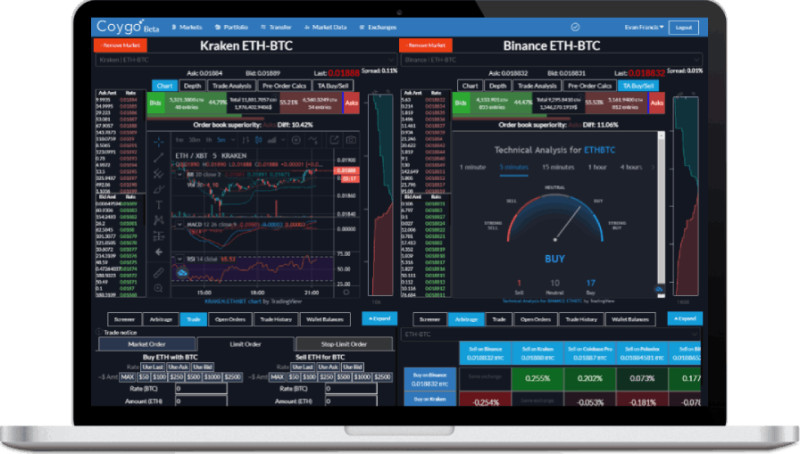
Coygo Bots runs locally on your macOS, Windows, or Linux computer. Exchange credentials stay encrypted on your machine - Coygo's servers don't access your exchange accounts. Their "Spot grid swing trader" strategy is open source, so experienced traders can inspect or modify the code. The creation process has six stages: sign in, select strategy, configure bot, set run duration, monitor via Activity Log, and stop when duration ends or manually. Test Mode simulates trades without real orders.
Dollar-Cost Averaging and Buy-the-Dip
Dollar-cost averaging (DCA) means buying a fixed amount at regular intervals regardless of price. Over time, this produces an average entry cost. A DCA bot automates the schedule and reduces the effect of entering all at once. RevenueBot describes DCA as reducing volatility impact and suiting long-term investment. Bitsgap's DCA bot spreads investment across regular purchases or sales to seek a more favorable average price.
Bitsgap's BTD bot uses a buy-the-dip strategy. It accumulates an asset as its price decreases, described as most suitable for a downtrend. The result still depends on market behavior - not every lower entry improves the final outcome. The COMBO bot combines DCA and grid methods for futures trading with leverage. Bitsgap claims it can generate profits 1,000 percent faster, but that's a product claim without standardized timeframe, benchmark, drawdown record, or independent verification.
A DCA strategy remains exposed to a sustained decline in the asset's price, and scheduled purchases can continue to lose value if the market does not recover.
Scalping seeks small price changes over short periods. A bot monitors a predefined condition and executes immediately. Refonte Infini describes scalping as seeking quick gains from movements in minutes or seconds, using one-to-three-minute charts, session overlaps, range trading, arbitrage, moving-average crossovers, and disciplined stop-loss policies. Scalping involves many commissions and rapid price changes - fees, volatility, latency, and strategy-specific losses all apply.
Risk Management Controls
Stop-loss orders close or trigger a position at a predefined price to limit potential loss. Commonly placed below market price for long positions and above for short positions. A bot monitors the threshold and submits the order automatically. Stop-losses face slippage, gaps, exchange outages, and rapid price movement.
Trailing stop-loss follows the market price as it moves and adjusts the stop level - a way to lock in gains while letting a position run if the favorable move extends. Take-profit rules close a position when a specified profit target is reached. Position sizing and capital limits matter, especially for Martingale and grid systems that create many orders or increasing position sizes.
Key Risk Controls
- Stop-loss orders at predefined levels
- Trailing stops that follow price movement
- Take-profit targets to lock gains
- Position size and capital allocation limits
- Diversification across assets
- Backtesting against historical data
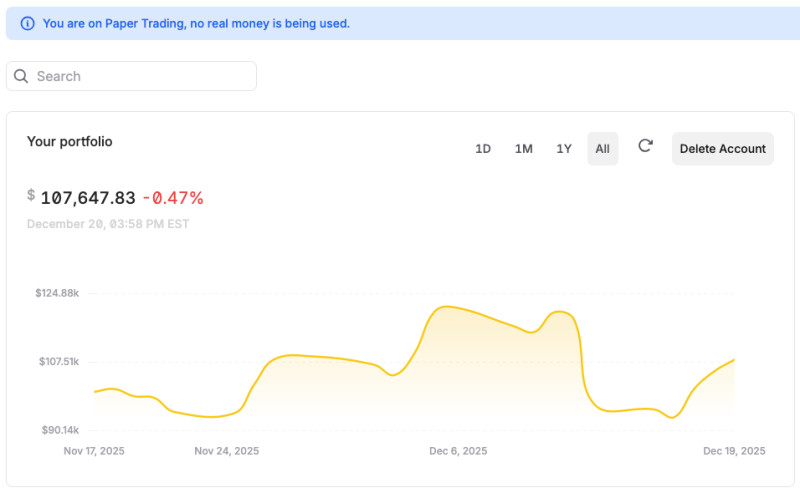
- Paper trading or Test Mode before live funds
- Regular monitoring of logs and activity
Backtesting evaluates a strategy against historical data. It helps expose logic errors and test how a rule would have behaved. A reliable bot should provide enough simulation controls to reproduce date range, pair, interval, fees, and strategy settings. But backtesting can mislead if it doesn't account for live liquidity, spread, slippage, downtime, or exact order sequence. Paper trading and Test Mode let you observe behavior without real capital - Coygo's Test Mode simulates trades without submitting real orders.
Security and Custody
API key protection is critical. Secure storage, restricted access, encryption, and reputable providers. A bot should only get permissions needed for its function. Credentials shouldn't be shared with unverified software or entered into untrusted interfaces.
Cloud vs local execution differs. Bitsgap is cloud-based. Coygo Bots run on your computer with encrypted credentials stored locally. Some approaches automate trades without transferring funds off the exchange - presented as a response to risks of moving assets to another custodial platform.
A bot or its host can be compromised even when the exchange is secure. Weak security features, poorly designed unregulated bots, and insecure API connections are risks. Active development, updates, encryption, transparent practices, and proven operating history are indicators to examine. Scam exposure is real - fraudulent platforms imitate legitimate services on social media, copy-trading scams target inexperienced traders, and Telegram scams exploit the platform's large audience.
Legal and Ethical Considerations
Legality varies by jurisdiction. Some countries require licenses for traders, operators, or automated systems. Users must follow local rules on crypto assets, automated trading, financial services, and account operations.
Market manipulation rules matter. Wash trading and spoofing may violate regulations. Front-running, false liquidity, and trades placed around another participant's transaction raise legal and ethical concerns. Rules depend on venue, jurisdiction, intent, and order behavior.
Automated trades are still financial transactions. Profits, losses, swaps, fees, and other taxable events may need reporting. Automation doesn't remove the obligation. Transparency is recommended when bot use materially affects trading volume or market activity. Arbitrage and portfolio rebalancing are listed as strategies more consistent with responsible activity. Unregulated or poorly designed bots expose users to security breaches, operational failure, unexpected behavior, and loss of funds.
Selecting and Comparing Bots
Strategy fit comes first. The bot should support the method you intend to trade - arbitrage, grid trading, DCA, trend following, scalping, market making, rebalancing, signal trading, countertrend, Martingale, buy the dip, futures or leveraged strategies. Exchange compatibility matters - spot or futures markets, geographic availability, API support, rate limits, supported currencies, order types.
Customization depth varies. Useful controls include adjustable indicators, price levels, order intervals, trade size, risk limits, stop-loss and profit targets, trading pairs, max run time, and strategy switches. A bot that can't accommodate your risk controls may not fit.
Backtesting and performance tools should include historical simulation, demo trading, equity curves, realized and unrealized P&L, drawdown info, order logs, win/loss stats, and export capability. Security and reputation need examination - API key storage, encryption, withdrawal permissions, developer reputation, public track record, reviews, update frequency, security practices, transparency about fees and risks.
What to Compare
- Supported strategies and customization depth
- Exchange compatibility and API features
- Backtesting, simulation, and analytics tools
- Security architecture and provider reputation
- Pricing model and total cost structure
- Ease of use and support quality
- Hosting model and custody arrangement
Pricing models include free software with limited features, free trials, monthly subscriptions, one-time paid software, revenue sharing, exchange fees, premium data or hosting, and custom development. A free bot may lack advanced tools, support, or updates. A subscription may add functionality and support. Revenue-sharing bots charge a percentage of generated profits. The cost-benefit comparison should include all trading and subscription costs.
Ease of use matters for beginners - clear instructions, tutorials, intuitive interfaces, responsive support. Active communities and forums help with troubleshooting and strategy examples. Advanced users may need API access, custom indicators, source-code inspection, or server deployment. The comparison should establish whether the bot runs locally, in the provider's cloud, or another arrangement, where API credentials are stored, whether withdrawals are possible, whether source code is available, and what access the provider has to funds or account data.
Platform Examples
Bitsgap is a cloud-based platform established in 2016 with over 15 exchange connections. Their automated products include Grid Trading Bot, DCA Trading Bot, BTD Trading Bot, COMBO Trading Bot for futures with leverage, and DCA Futures Trading Bot. They report 3.7 million bots activated and trading volume over $300 billion in 2022. Supported exchanges include Binance, Coinbase Advanced, Kraken, Kucoin, OKX, and others. Supported coins cover Bitcoin, Ethereum, Solana, Cardano, and many altcoins. They offer a seven-day PRO trial without a credit card.
RevenueBot presents six strategies: Martingale, DCA, trading with one order, signal trading, trend trading, and countertrend trading. It supports automation of recurring purchases, recovery sequences, limit orders, and TradingView signals. Historical exchange support list includes Binance, Bybit, Kraken, Kucoin, and others. The platform references simulation mode, backtesting, configurable filters, pair selection, futures-margin settings, and bot-chain updates.
Stoic AI appears in a review index with topics like "The Best AI Trading Bots of 2026" and "Why Trading Bots Work 24/7 While Traders Can't." Their approach focuses on automated trading while funds remain on the exchange. The review index includes comparisons like Mudrex vs 3Commas, Titan Crypto vs Coinbase, Shrimpy vs 3Commas, and 3Commas vs Bitsgap.
3Commas operates since 2017 offering DCA, Grid, and Options bots with a Smart Trade Terminal combining manual and automated trading. Cryptohopper is noted for a user-friendly interface. Pionex is another named platform. Refonte Infini describes itself as an AI and scientific-algorithmic-trading company since 2016 with products including AI Grid bots, DCA bots, Smart Rebalancing, AI Martingale, a Scientific Trading Robot, Telegram crypto bots, sniper bots, copy trading, and a robot marketplace. They claim consistent 11 percent monthly profit since 2018 - that's their claim, not independently verified.
AI and Machine Learning
AI and machine learning expand data analysis volume and speed. Refonte Infini articles discuss deep learning for analyzing unstructured data, identifying patterns, and making predictions. They associate development with banks, hedge funds, and trading platforms. AI applications include automated trading, fraud detection, and blockchain infrastructure improvements. Explainable AI (XAI) aims to make automated financial decisions more transparent and trustworthy.
Quantum computing is presented as potentially affecting how crypto trades are conducted, strategies developed, and risks managed - a forecast, not a current feature. The source material doesn't remove the need for testing, risk controls, security, or human oversight. A model may produce hard-to-interpret output, overfit historical data, fail after a market regime changes, or encode assumptions not visible to the user.
AI and machine learning can expand the volume and speed of data analysis, but the source material does not remove the need for testing, risk controls, security, or human oversight.
Building Your Own Bot
Building a bot involves creating software that executes orders per predefined strategies and market data. Typical design includes market-data connection, decision logic, risk controls, order execution, monitoring, and exchange connectivity. Fourchain states average build cost ranges from $8,500 to $25,000, varying by development team and location.
Development topics cover general construction, high-frequency trading bots, decentralized trading bots, front-running bots, sniper bots, risk-management systems, grid bots, triangular arbitrage bots, bot optimization, Telegram trading bots, market-making bots, flash-loan arbitrage bots, and sandwich bots. These identify areas of interest but don't constitute complete technical instructions.
Optimization involves careful adjustment using known parameters and efficient methods. Backtesting, parameter review, fee awareness, strategy selection, and market-condition changes are relevant considerations. A 2026 feature guide identifies automated and customizable trading strategies as necessary bot capabilities.
Stop-Loss, Take-Profit, and Volatility
Stop-loss orders automatically close a trade at a predefined market price. For long positions, stops go below market price; for short positions, above. Automated execution integrates with Take Profit features. Stop-loss vs stop-limit differences are offered as risk-management features in crypto bots.
Crypto AI trading combines high volatility, fast price movement, data-driven decisions, and significant potential rewards and losses. Risk-management strategies, tools, and techniques during volatile periods include stop-loss, trailing stop, take-profit, diversification, position limits, stop duration, backtesting, paper trading, software updates, API monitoring, activity logs, and regular settings review.
Backtesting, API Integration, and Order Execution
Backtesting evaluates a strategy against historical market data before live trading. It identifies weaknesses and improves execution. Strategy optimization is ongoing - a strategy must adjust as market conditions change rather than stay fixed.
Market making maintains liquidity and facilitates trading by continuously placing buy and sell orders around the current market price. Market makers benefit from the spread but face inventory risk if prices move strongly one direction.
API integration is the technical connection between trading software and external systems. In a crypto bot, the API provides price data, account information, and order execution. Order execution focuses on speed and precision for rapidly changing markets. Automated execution responds to the difficulty of manually monitoring and submitting every order.
Manual vs Automated Trading
Manual trading requires you to monitor markets, interpret data, and submit orders directly. Automated trading uses software to perform predefined tasks continuously. Automation improves speed, repetition, and data processing. Manual trading allows direct human judgment during unusual events. Neither approach is universally superior. Bots still require oversight, and manual traders face emotion, fatigue, and execution delays.
Frequently Asked Questions
Crypto trading how does it work - automated cryptocurrency trading executes purchases and sales per predefined guidelines based on time, price, volume, technical indicators, or mathematical models. Software interacts with an exchange, analyzes data, and decides per your rules.
Algorithmic trading applies computer algorithms to trading operations per predefined rules based on time, price, volume, or mathematical models. These systems process large data amounts and execute faster than humans, reduce emotional bias, but remain exposed to unstable markets, incorrect models, software errors, and execution risk.
Trading-bot efficiency includes profitability, prediction accuracy, speed, and risk-management ability. Profitability compares with a benchmark. Accuracy measures correct prediction proportion. Speed measures processing and execution time. Risk management evaluates stop-loss use, diversification, position limits, and volatility responses. Efficiency changes with market conditions, programming quality, strategy selection, data, fees, exchange conditions, and user-defined rules.
A grid strategy attempts multiple small trades as price fluctuates within a horizontal or sideways range. The bot places orders around a target price. The configured gap must be narrow enough for activity but wide enough to remain profitable after fees. Actual profit depends on price path, order fills, fees, and bot settings.
Bitsgap states a bot can start with a modest amount or, on platforms with simulation, no live capital. Demo or paper-trading mode observes strategy behavior before committing funds. Most strategies require tuning - a trading algorithm isn't entirely autonomous.
No, a bot cannot guarantee profits. Profitability is uncertain. Bots execute rules; they don't guarantee positive results. Market volatility, incorrect configuration, technical failures, fees, competition, and changing conditions can all produce losses.
Common indicators include moving averages, RSI, Bollinger Bands, and MACD. Bots may also use volume, price, time frames, momentum, support and resistance, order-book info, and sentiment data.
Strategies requiring the most speed: scalping, high-frequency trading, arbitrage, sniper strategies, and some triangular strategies. Practical results depend on latency, exchange response, liquidity, order execution, and fees.
After activation, monitor current settings, strategy decisions, orders, fills, open positions, realized and unrealized P&L, API connectivity, exchange errors, risk limits, and market condition changes. Coygo's Activity Log shows bot decisions over time.
The source material doesn't establish that AI bots are more profitable than rule-based bots. AI and machine learning expand data analysis and adaptation, but performance depends on model, data, strategy, programming, market conditions, execution, and risk controls. Explainability and transparency are important issues for financial AI.












Comments on “A Practical Guide to Cryptocurrency Bot Trading Tools and Strategies”
No comments yet. Be the first to share your thoughts.