
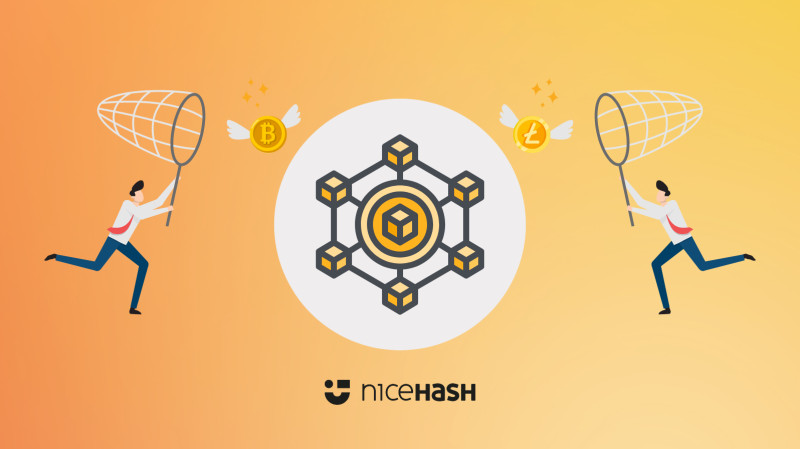
What Cryptocurrency Mining Actually Does
Mining is not just about making new coins. It also validates transactions on a blockchain and adds them to a shared ledger. This validation role helps prevent double spending, where the same digital money could be spent twice. When someone sends cryptocurrency, the ledger must debit the sender and credit the receiver. In a network with no central authority, miners do that checking and recording work. Mining rewards give miners a reason to perform that work and help secure the network. If you have wondered what mining really means , it is this combination of transaction validation and new coin release.
A proof of work consensus protocol decides who may validate transactions and add blocks. Miners compete using computing power to solve cryptographic math problems. The first miner to find the required result can add the block and receive the reward. The puzzle is described as difficult to solve but simple to verify. NiceHash compared it with Sudoku or Battleship, but at a much higher level of complexity. The process is called proof of work because the miner demonstrates that the computation was performed and includes the data needed to verify it.
Mining is not limited to creating new coins. It also involves validating transactions on a blockchain and adding them to a distributed ledger.
How the Blockchain Works in Simple Terms
A blockchain is a decentralized database with multiple authentication processes and no single control point. Think of it like multiple independent computers connected through the same network. Each computer holds its own copy of the same document. When one participant makes a change, the other participants check the change and update their copies. If one computer fails or the network goes down, other copies remain available and can be compared with one another.
Changing the blockchain would require altering every existing block before another block is created. A new block is created about every ten minutes on Bitcoin, making a change of that scale impossible with the computing power available. Each block contains information that refers to the preceding block. This creates an unbroken chain extending back to the first block. Network participants can compare blocks and determine whether the sequence is valid and whether miners performed the work required for their rewards.

Mining Difficulty and Block Intervals
Mining difficulty is the network's mechanism for adjusting the puzzle. Its purpose is to keep block creation at a relatively stable rate even when more or less computing power is active. When more miners and more powerful machines begin searching for solutions, blocks would otherwise be found more quickly. The response is to increase difficulty, which requires more hashes and more computing power. Miners with older or less competitive equipment may respond by upgrading, buying additional hardware, or stopping because electricity and equipment costs can make their operations unprofitable.
When miners leave the network, competition falls and the difficulty can decrease. Lower difficulty makes mining easier and reduces the amount of computing power needed to find a block. Miners may then return, after which competition can push difficulty upward again. The result is a repeating cycle driven by network participation, hardware economics, and expected rewards. Bitcoin's network targets an average interval of approximately ten minutes per block. Its difficulty adjustment occurs about every two weeks on average. Other networks use different algorithms and intervals. Litecoin, for example, produces a block about every 2.5 minutes.
How difficulty affects miners
- More miners join → difficulty rises → older gear becomes less profitable
- Miners leave → difficulty falls → mining gets easier for remaining participants
- Difficulty adjusts automatically based on network hash rate
- Cycle repeats as long as the network runs
From CPU to ASIC: Hardware Evolution
In cryptocurrency's early days, Bitcoin and other networks could be mined with a relatively simple central processing unit chip in a home computer. CPU mining was once a common entry point because general purpose computers already had processors capable of performing the required calculations. As network difficulty increased, CPU mining became too slow and impractical for many cryptocurrencies. One source notes that it could take months to accumulate even a small amount of profit when electricity, cooling, and rising network difficulty were considered.
Graphics processing units, or GPUs, can perform many repetitive calculations in parallel. A GPU mining rig combines multiple GPUs under one system to increase the available computing power. A GPU rig requires more than the processors themselves. The cited setup also calls for a motherboard, multiple GPUs, a cooling system, a reliable internet connection that remains active, mining software designed for the selected cryptocurrency, and access to a mining pool for the pool based setup described. GPU equipment can be more flexible than application specific integrated circuits because the same general purpose hardware may be used for several computational tasks. At the same time, multiple GPUs produce considerable heat and consume significant electricity. Cooling and power expenses therefore affect profitability.
An application specific integrated circuit, or ASIC, is designed specifically for mining a particular cryptocurrency or algorithm. ASIC miners generally produce more cryptocurrency units than GPUs for the supported network. The tradeoff is cost. ASIC miners are expensive, and an ASIC designed for an obsolete algorithm can rapidly lose usefulness as mining difficulty increases or the network changes. Hardware cost, electricity, cooling, and expected rewards all affect whether the equipment remains economical. The sources state that mining machines consume considerable electricity and generate significant heat. An illustrative ASIC figure in the detailed mining guide states that an average ASIC miner uses about 72 terawatts of power to create a bitcoin in about ten minutes. The wording and unit are reproduced as supplied in the source, which also notes that the figures change as technology advances and mining difficulty rises.
ASIC miners generally produce more cryptocurrency units than GPUs for the supported network. The tradeoff is cost.
Cloud Mining and Rented Hashpower
Rising GPU and ASIC costs have made remote mining services more prominent. Cloud mining allows an individual to rent computing capacity from a company or a dedicated mining facility rather than operate every machine personally. Free and paid cloud mining hosts can be found online. A customer may rent a mining rig for a set period and pay according to the service's arrangement. This is described as the most hands free method because the provider operates the physical infrastructure, while the customer supplies the purchased computing capacity.
A hashpower broker operates in a related way. NiceHash, for example, describes itself as a marketplace that sells or rents the computing power required to mine supported cryptocurrencies. Buying an EasyMining package means buying hashpower for a stated period rather than purchasing the underlying hardware. With EasyMining, the customer does not need to install a graphics card, operate a powerful computer, or own an ASIC. The cited process requires access to NiceHash and some Bitcoin to purchase the package. The service calculates package probabilities and displays the available hashpower and progress in the user's dashboard.
EasyMining package process
- Obtain some Bitcoin
- Choose a mining package
- Select a supported coin or reward objective
- Purchase the package
- View the hashpower speed and progress on the dashboard
- If the purchased computing power validates a block, wait for network confirmation and claim the reward
The EasyMining options listed at that time were Bitcoin, Bitcoin Cash, Litecoin, Dogecoin, Ravencoin, and Kaspa. The cited buying flow specifically mentioned packages for trying to catch Bitcoin, Litecoin, or Dogecoin rewards. More coins were expected to be added, but the article did not guarantee future availability. Purchased hashpower differs from owning and operating mining hardware. A hardware buyer controls equipment that directly performs calculations. A hashpower customer buys temporary access to capacity through a marketplace. The marketplace service calculates the displayed probability of obtaining a reward, but the customer cannot independently force the network to produce a block during the purchased period.
Mining Pools: Combining Resources
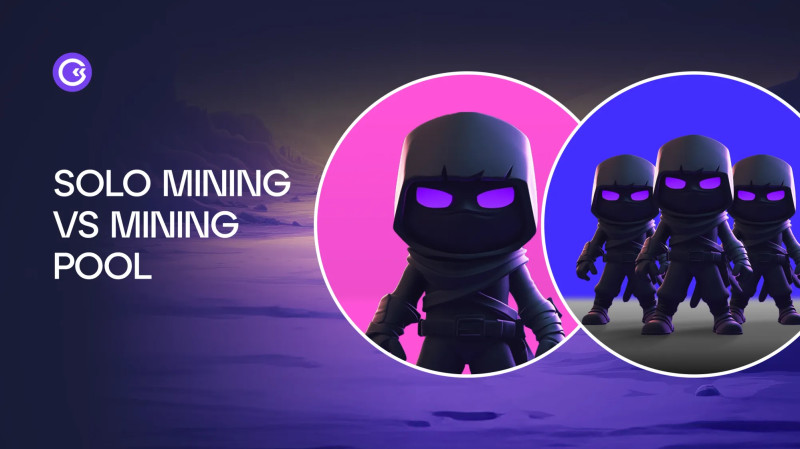
A mining pool combines the computational resources of multiple miners to increase the chance that the group will find a block. If the pool succeeds, its reward is divided among participants in proportion to the resources each contributed. Mining software may come with a configured pool. Miners can also join pools created by other cryptocurrency enthusiasts or operate their own pool. Because pool performance and rewards can differ, miners may move between pools.
The mining guide identifies official or established pools as potentially more reliable because their host companies may provide upgrades and technical support. CryptoCompare is named as a place to compare pools by factors such as reliability, profitability, the cryptocurrency being mined, available features, and host support. Pool and hardware economics are separate. A more powerful machine contributes more hashes, but profitability still depends on difficulty, electricity prices, cooling, equipment costs, the network's reward, and the value of the resulting cryptocurrency.
A mining pool combines the computational resources of multiple miners to increase the chance that the group will find a block.
What Determines Whether Mining Is Profitable
The cited profitability factors include hash rate or computational output, electricity consumption, the local cost of electricity, hardware purchase cost, cooling requirements and costs, cryptocurrency network difficulty, the number of active miners, the network's block reward, the monetary value of the reward, and whether a cloud or hashpower service offers a viable alternative to owning hardware. Mining difficulty is especially important because a fixed amount of computing power can become less profitable or entirely unprofitable when difficulty rises. Difficulty can later fall, but the timing is not controlled by an individual miner.
A miner that stops when profitability declines contributes to a reduction in network competition. As difficulty falls, less hashpower is required, operating costs may become manageable again, and additional miners may return. This cycle can continue throughout the network's life. GPU and ASIC systems require particular attention to power and heat. CPU systems have lower specialized hardware costs but are much less competitive on the major networks described. Cloud services reduce the need to own and operate equipment, although the available package, duration, probability, and reward terms determine what the customer receives.
Key profitability factors
- Hash rate and electricity consumption
- Local electricity cost and hardware purchase price
- Cooling requirements and network difficulty
- Number of active miners and block reward value
At the peak of the earlier cryptocurrency mining boom, demand for GPUs increased sharply. The source notes that GPU manufacturer Advanced Micro Devices reported strong financial results and that its stock reached its highest level in a decade. The mining gold rush was then described as slowing because difficulty for major networks such as Bitcoin increased quickly. The guide nevertheless states that cryptocurrency mining can still be profitable under suitable conditions. Professional miners are described as continually studying changes in technology, difficulty, hardware, and network conditions. They optimize their setups and strategies to improve performance. The mining space changes as new equipment, consensus rules, and service models appear. If you are researching which coin pays best , remember that profitability shifts with difficulty and price.
Not Every Cryptocurrency Can Be Mined
A cryptocurrency can only be mined directly when its network uses a mineable consensus process, such as proof of work, and the asset is created through that process. A digital token can exist on a blockchain without being independently mineable. Bitcoin is used as the main proof of work example. A token issued through a smart contract is a different type of asset. It can circulate on a blockchain while its supply is controlled by the contract's issuer. USDC is an example of a token that is not mined. Mining one cryptocurrency also does not mean mining every asset that appears in the same ecosystem. Ether could be mined under the historical PoW workflow described in the sources, while tokens created on Ethereum followed smart contract rules. Acquiring ether through mining or another method could provide the funds needed to create and use a token.

Why USDC Cannot Be Mined
USDC is described as a centralized stablecoin intended to remain equal to one U.S. dollar. Its value is therefore presented as tied to the U.S. dollar rather than determined only by supply and demand in an open market, as described for Bitcoin and Ether. Circle is identified as the company behind USDC. Circle controls issuance and is described as ensuring that every USDC unit is backed by U.S. dollars. Reserve reports from the consulting firm Grant Thornton are said to be available on a regular monthly basis. The reserves backing USDC are described as consisting of cash, short duration U.S. government bonds, and instruments convertible into U.S. dollars at any time.
A mineable proof of work network allows miners to compete for the right to create blocks and issue the network's native reward. The cited Bitcoin process groups transactions into a block, solves a mathematical problem, sends the block reward to the successful miner, and continues until the network's issuance limit is reached. USDC does not follow that process. The source describes it as an ERC-20 token created within the Ethereum ecosystem. Instead of being generated by arbitrary proof of work competition, new USDC is issued through a process controlled by Circle.
USDC issuance process
- An entity that wants to issue USDC must contact Circle
- It must comply with Circle's legal requirements
- The required dollar amount is sent to a designated account
- The USDC smart contract creates the corresponding new USDC units
- The smart contract sends the new units to the issuer's Ethereum wallet
The process does not involve solving a proof of work puzzle and does not give the public an opportunity to compete for newly issued USDC through mining hardware. In the account dated March 23, 2023, USDC was described as the seventh ranked cryptocurrency by market capitalization and the second largest stablecoin. The source stated that many users would prefer Circle's USDC because of its reserve reporting. It contrasted this with its statement that no reliable audits were known for Tether. These are claims made in the dated source and are not supplemented here with later regulatory or audit information.
Historical Ethereum Workflow: Mining and Token Creation
The Ethereum Foundation workflow described below was published by Alex Van de Sande, identified as the foundation's lead designer, on December 3, 2015. It documents a PoW era process and a tutorial for creating a token through a smart contract. The tutorial was intended for users who could operate an office suite and use a spreadsheet but were not comfortable with command lines. Its stated purpose was to demonstrate that Ethereum activities could be performed through graphical interfaces and standardized contract code.
The Ethereum Wallet was described as a multiplatform application for sending ether, sending Ethereum based currencies, creating contracts, executing contracts, creating an Ethereum account with a strong password, monitoring account balances and transactions, and deploying and interacting with smart contracts. The wallet required ether to perform operations. The tutorial said the contracts used in the examples would each cost less than one tenth of a U.S. cent.
For testing, the instructions directed users to the wallet's Develop, Network, and Testnet menu and select the Morden test network. The user could then select Develop and Start Mining. After mining for a few minutes, the account would supposedly have enough test ether to try the contracts. The instructions then advised stopping test mining to save computer resources. The wallet's built in mining function was limited to the test network. The historical instructions said live network mining required a more advanced tool. AlethOne was presented as a straightforward GPU miner with two principal buttons: one to start mining and another to deposit or collect the rewards in a wallet.
The wallet's built in mining function was limited to the test network. The historical instructions said live network mining required a more advanced tool.
Creating a Standardized Token on Ethereum
The token creation tutorial did not create a new proof of work cryptocurrency. It deployed a smart contract that followed a standard token format. The supplied contract code still had to be pasted into the wallet, but the user was not required to write a program from scratch. Tokens in the Ethereum ecosystem could represent any fungible and tradable good, including coins, loyalty points, gold certificates, IOUs, in game items, records of worked hours, and other assets represented by transferable units. Because tokens implemented basic features in a standardized way, a newly created token could be compatible with the Ethereum Wallet and other clients or contracts that used the same standards.
The deployment procedure began on the wallet's contracts page with the option to deploy a new contract. The user pasted the supplied Solidity source into the source field. If it compiled without an error, a contract selection menu appeared. The tutorial directed the user to select the contract named MyToken. The recommended parameters were total supply of 10,000 tokens, any desired name, symbol of percent sign, and decimal places of 2. The bottom of the deployment page displayed an estimate of the computation cost. The user could select a fee and specify how much ether to pay. Any ether not spent was to be returned, so the tutorial said the default settings could be retained.
Token deployment steps
- Open wallet contracts page and select deploy new contract
- Paste Solidity source code into source field
- Select MyToken from contract selection menu
- Set parameters: supply, name, symbol, decimals
- Review computation cost estimate and select fee
- Enter account password and wait for confirmation
After confirmation, which the tutorial said could take no more than about a minute, the main account displayed 100% of the newly created token supply. To send tokens, the user selected the send function, chose the new currency rather than ether, pasted the recipient's address, and sent the tokens. A recipient's wallet did not automatically recognize an unfamiliar token. The contract address therefore had to be added manually. The resulting token could be used for local community value exchange, tracking worked hours, loyalty programs, or other applications requiring a transferable unit. The article distinguished this token creation process from proof of work mining: the token supply was governed by the deployed smart contract rather than created through a mining competition.
Tax Consequences of Mining
Mining can create tax events at two stages: when cryptocurrency is received as a mining reward, and when the reward tokens are sold or exchanged. The tax discussion relies on Internal Revenue Service Notice 2014-21. Under the treatment described in the source, a miner recognizes gross income when reward tokens are received. The income is measured by the fair market value of the cryptocurrency at the time of receipt.
The source describes different classifications depending on the taxpayer's role. If the mining activity constitutes a trade or business, reward tokens may be treated as self employment income. If the taxpayer performs mining as an independent contractor, the reward may be subject to self employment taxes. If the taxpayer performs mining as an employee, cryptocurrency payments may be treated as wages. Wages may be subject to federal income tax withholding, Social Security, Medicare, and unemployment taxes. These are the classifications described in the source. The material does not provide current filing thresholds, capital gains rules, state by state treatment, or a universal formula for calculating total tax due.
Legal Status Around the World
The legal overview states that many jurisdictions had not enacted comprehensive cryptocurrency laws, making the legality of mining unclear in a number of countries. It says that relatively few countries prohibited mining outright, apart from jurisdictions that had specifically banned cryptocurrency related activity. The source gives several country and regulatory examples. Under the Financial Crimes Enforcement Network, or FinCEN, crypto miners were described as money transmitters and therefore potentially subject to money transmission laws. Israel was described as treating cryptocurrency mining as a business subject to corporate income tax. India was described as continuing to face regulatory uncertainty. Canada and the United States were described as appearing friendly toward cryptocurrency mining. The legal status presented is time sensitive and jurisdiction specific. The source did not provide a complete country by country analysis or detailed mining restrictions. If you are looking into mining operations in the US , check local regulations first.
Difficulty, Technology, and Environmental Pressures
Mining difficulty tends to increase as miners deploy more advanced machines. More capable equipment raises total network computing power, which causes the network to raise its difficulty target. Increased competition can make older equipment less profitable and can contribute to greater network scarcity. Professional miners respond by studying new technologies and optimizing their equipment and strategies. The source characterizes continuous learning and optimization as necessary because hardware, difficulty, networks, and market conditions change.
Environmental concerns are also identified as a major issue. As cryptocurrency mining has expanded, the amount of electricity consumed and the heat produced by mining equipment have increased. Climate advocates have raised concerns about the use of fossil fuels to generate that electricity. These pressures led the Ethereum community, as described in the source, to consider replacing its proof of work framework with a more sustainable proof of stake framework. Proof of stake is contrasted with proof of work because participation does not center primarily on computational competition. The source does not provide a timeline or implementation details for the proposed transition.
Environmental concerns are also identified as a major issue. As cryptocurrency mining has expanded, the amount of electricity consumed and the heat produced by mining equipment have increased.
Illicit Cryptomining and Cryptojacking
Cryptojacking is the unauthorized use of computer resources to mine cryptocurrency. Attackers can install malicious software, compromise websites, or inject scripts that cause a victim's hardware to perform mining work for the attacker. A security overview by Marc Blackmer, published on April 26, 2018, described illicit cryptomining as software that hijacks system resources to generate cryptocurrency. Cisco's Talos threat intelligence team had reported an increase in this activity, particularly after many cryptocurrencies rose in value.
Illicit mining was described as a relatively simple and dependable way for attackers to generate cash. The 2018 security account said Talos was observing a shift away from ransomware toward cryptomining. One reason given was that only about one third of ransomware victims paid the ransom, making mining attractive when victim systems remained under attacker control. Although cryptojacking represented a small part of the overall threat landscape at the time, its effects could be more serious in some industries.

Risks to Industrial and Purpose Built Systems
Industrial control systems power critical infrastructure. Many are purpose built with only enough resources to perform their designated functions. Mining can consume enough processor capacity to overwhelm a device that lacks spare capacity. Potential effects described include degraded service delivery, device or system outage, disruption of critical infrastructure, reduced availability of equipment designed for a narrow operating purpose, and failure of services that depend on the affected system. A power grid was used as an example of infrastructure that could be damaged by mining induced resource exhaustion. The danger is not limited to financial loss; excessive computation can interfere with the system's primary function.
Cisco Talos's research included a cryptocurrency called Bitvote. The 2018 account said Bitvote had not generated much profit for illicit miners, but the methods used to mine it showed greater sophistication than Talos had previously observed. The source characterized cryptojacking as still being in an early stage. It expected attackers to continue developing more sophisticated methods as long as mining remained profitable. Marc Blackmer was identified as an engineering product manager involved with IoT product management and networking.
How Browser Based Cryptojacking Evolved
A 2020 analysis by Qualys Malware Research Labs examined methods used to hide browser based cryptomining from users and security products. Browser based cryptojacking uses malicious JavaScript to make a visitor's system resources mine cryptocurrency. An attacker can compromise a website and embed mining code. Every visitor may download the script and unknowingly contribute computing power to a cryptocurrency wallet controlled by the attacker. CoinHive was identified as the first browser based cryptomining service provider. It allowed website operators to enable browser mining by embedding a few lines of code. Attackers exploited the service by injecting the mining functionality into vulnerable websites.
The mining component was fetched from the CoinHive server and instantiated in the visitor's browser. Because browser mining is resource intensive, the process could consume more than 70% of CPU power and degrade the user's system performance. An early defense was to block domains known to host cryptomining scripts. An intrusion prevention system could compare domain traffic with a blacklist and deny access to mining script hosts. The first generation of browser cryptojacking was therefore detectable by identifying the service's domain. Because the malicious script came directly from a known service, blocking that domain could stop many attacks.
Evolution of browser cryptojacking defenses and countermeasures
- Direct JavaScript loaded from CoinHive
- Domain based blocking by security tools
- Proxy domains and randomized URLs to hide mining hosts
- Crowdsourced browser extension blocklists like No Coin and MinerBlock
- JavaScript obfuscation to evade signature based detection
- CPU throttling to avoid visible performance degradation
- Complex combinations of proxying, obfuscation, and throttling
Detection Tools for Cryptojacking
Qualys Malware Research Labs developed a free Chrome browser extension called Qualys BrowserCheck CoinBlocker. The source described several capabilities: domain blacklisting, domain whitelisting, JavaScript scanning, detection of obfuscated JavaScript, detection of mining components behind proxies, blocking of malicious JavaScript functions, and updates as new attack methods emerged. The research team analyzed new cryptojacking techniques and incorporated updated detection methods into the extension. The tool was designed to address the weaknesses of simple URL blocklists by inspecting the code being executed rather than relying only on the address from which it came.
If you are asking how to start mining or ways to mine crypto , the answer depends on your hardware, electricity costs, and which coin you target. Some people look for the mining app that fits their setup or the software that matches their gear . Others wonder about mining on a phone , but mobile devices lack the hash rate for serious proof of work networks. A mining operation at any scale means weighing equipment cost, power draw, cooling, and network difficulty against the block reward and coin price. The miner's job is to solve the puzzle, prove the work, and earn the reward - nothing more, nothing less.









Comments on “What You Should Check Before You Mine a Cryptocurrency Safely”
No comments yet. Be the first to share your thoughts.