
What DEX Trading Platforms Are
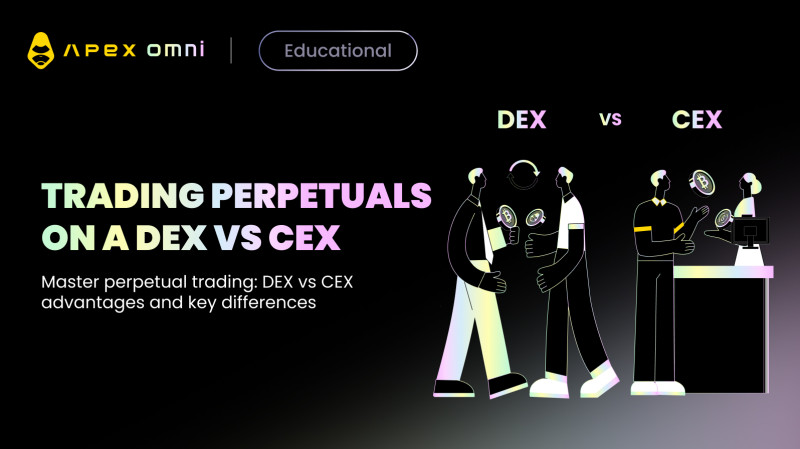
Decentralized exchanges - or dex trading platforms - run on blockchain networks. They use smart contracts to execute trades without a central boss. I like to think of them as a vending machine that holds no cash but swaps coins by code. Every trade lands on a public ledger for anyone to inspect.
These dex trading platforms give you full control of your funds. You hold your coins in your own wallet. No middleman touches your money. That’s a big deal for anyone who cares about sovereignty and doesn’t want to ask permission.
All transactions sit on a public chain. Anyone can inspect them. This open view builds trust through math, not a company promise. I find that refreshing in a space full of black boxes.
The core idea is financial sovereignty. You trade global access for transparent operations. No one blocks your swap because they don’t hold your keys. That matters when platforms fail or freeze accounts.
CEX Basics and The Custody Trade-Off
Centralized exchanges - or CEX - work differently. A company runs the show and matches orders off-chain. You deposit coins into their custody. That introduces counterparty risk if the platform fails. But you get fast internal transfers and cross-collateralization.
When you use a CEX, you trust them with your assets. Some people learn how to buy on Coinbase and just leave coins there for ease. Others prefer a Crypto.com trading platform for the app feel. I get the convenience, but the trade-off is real.
There’s also the matter of sign-up bonuses many CEX dangle to pull in users. Those perks are nice but don’t fix the trust issue. Always weigh control vs comfort before you park funds.
CEX users benefit from deep liquidity and familiar infrastructure. They can move coins inside the house instantly. Yet they depend on platform integrity and rule changes. A hack or bankruptcy can wipe stored balances overnight.
On the flip side, dex trading platforms remove that default risk. You face smart-contract bugs instead. It’s a swap of worries, not a magic fix. Know which scare you more.
How DEX Trading Platforms Work With Smart Contracts
The core of dex trading platforms is the smart contract. It’s code on the blockchain that executes swaps when conditions are met. No human approves the trade. This removes exchange default risk and keeps you in charge.
But code can have bugs. You face smart-contract risk instead of platform failure risk. Collateral flexibility is lower since you hold the keys. I’d say that’s a fair swap for many crypto natives who hate paperwork.
On a DEX, you connect a wallet and sign. The contract checks the math and moves tokens. If the code is weak, funds can drain. So audits matter a ton. I always peek at who reviewed the contract before trading size.
Reduced collateral flexibility means you can’t easily cross-pledge like on CEX. You post specific assets. That limits some plays but clears the counterparty cloud. Simple as that.
Sushiswap as A Simple DEX Example
Sushiswap is one popular DEX. It lets users swap coins without trusted third parties. You get a blend of security, privacy, and autonomy. Features include yield farming and governance via SUSHI tokens.
It supports many chains and has a simple interface. Compared to Uniswap and PancakeSwap, it adds staking rewards. Many liquidity providers report good returns from farming there.
The project runs community-driven governance. Token holders vote on changes. That keeps power with users, not a board. I like seeing a DEX where the crowd steers the ship.

Sushiswap shows what dex trading platforms can be: no custodian, open code, multi-chain reach. It isn’t perfect, but it paints the picture for newcomers better than any doc.
Perpetual Swaps On DEX vs CEX
Perpetual swaps are a type of derivative with no expiry. They let traders bet on price with leverage. On dex trading platforms, you keep custody while trading perps. On CEX, you deposit and get advanced execution.
The crypto derivatives space has grown fast. Perps are now a dominant instrument. They use index price, mark price, and funding rate to stay near spot. This lets you hold a position as long as you like.
Custody differs hard. CEX traders deposit and gain cross-collateral perks. DEX traders self-custody and face code risk. Both models have fans, and savvy folks often run accounts on each.
Liquidity depth is another split. CEX books are tight with sub-ms fills. DEX pools are thinner with wider spreads. Layer 2 chains are closing the gap, but don’t expect identical feel.
Pricing on CEX uses internal mark with real-time updates. DEX relies on external oracles like Chainlink or Pyth. That can lag or be manipulated if weak. Safeguards like TWAP smoothing help.
Funding Rates and Price Alignment
Funding rate is a periodic payment between longs and shorts. If perp price is above index, longs pay shorts. This keeps the perp aligned with spot markets. It creates arbitrage that I find pretty clever.
Funding mechanism creates continuous arbitrage opportunities that naturally align the perpetual's price with underlying spot markets.
On CEX, the venue controls mark price and funding automatically. On DEX, external oracles like Chainlink or Pyth feed prices. That can add delay but brings transparency to the math.
Index price pulls from many spot venues to show true value. Mark price adjusts for funding to avoid unfair liq. Together they keep the perp honest. I watch these before opening any leveraged slot.
A worked cost example shows the gap. A DEX taker on a layer 2 for 1 BTC at $30k paid about $50 total incl slippage, fee, gas, funding. A CEX maker limit saved fees and netted a tiny credit. Small edges add up.
Liquidity and Slippage Differences
CEX often has deep order books from market makers. Spreads are tight and slippage low. DEX liquidity is more spread out, so spreads widen and slippage can bite. Layer 2 solutions help speed things up.
MEV bots on DEX can sandwich your trade, worsening slippage. That’s a real pain. Still, dex trading platforms are improving with better routing and flash blocks.
If you’re scanning for where to day trade crypto , check the pair depth first. Thin books will cost you. I learned that the hard way on a low-cap alt pool.
Execution quality varies. CEX can evaporate liquidity in crashes. DEX faces latency from block times. Both can hurt. Plan exits before the storm, not during.
Insurance and ADL differ too. CEX has big insurance funds and auto-deleveraging only in extremes. DEX uses community funds that may socialize loss if drained. Read the docs on each platform’s backstop.
Leverage Trading With DEX Platforms
Decentralized leverage trading mixes DEX with borrowed funds. You can trade bigger positions while staying in control of keys. Types include margin platforms, perp platforms, and options platforms.
Kinds of DEX leverage platforms
- Margin trading platforms let you borrow to boost size.
- Perpetual swap platforms trade contracts with no expiry and pay funding.
- Options trading platforms let you sell premiums for leverage.
- All avoid a central authority and use tamper-proof smart contracts.
Key features often include auto trading, clear margin info, and user-friendly screens. Security comes from blockchain and audits. I appreciate no lengthy ID checks to start.
Advantages of DEX leverage development over centralized exchanges: Security, Transparency, Accessibility.
Margin trading lets you pick leverage and the system calc requirements. Perp platforms pay funding fees to holders. Options give right to buy or sell at set price. Each fits a different appetite.
Decentralized leverage trading platforms combine power of DEXs with leverage in a secure env. No central authority means less freeze risk. But you must guard your keys and watch contract bugs.
BNB Chain and Perp DEX Growth
BNB Chain has become a hub for perp DEXs. Many leading platforms are native there. New entrants like EdgeX, Orderly, and ADEN pushed growth in this area.
If you’re wondering about where to buy native market crypto , BNB Chain offers a bunch of direct perp markets. Hyperliquid and Ethereum lead in scale, but BNB is close.
Projects like GMX, dYdX, and Jupiter show varied fee models. Some offer zero maker fees. Liquidity vaults share profits with providers. It’s a lively space with constant tweaks.
Hyperliquid uses a VIP fee tier with maker rebates and an HLP vault that bears liquidation loss. GMX pays LPs most protocol fees and shows high APR. dYdX runs a staking pool for retail to earn.
Oracle handling on BNB perp DEXs uses multi-source feeds. Pyth, Chainlink, and Binance Oracle combine to cut manipulation. Liquidation logic varies but aims to protect the system during swings.
EdgeX uses Stork oracle to prevent low-liquidity liqs. Aster uses both last and mark price with ADL. Jupiter aggregates oracles but limits to few assets. Each design trades speed for safety in its own way.
The ecosystem gives devs SDKs and APIs. Aster broker SDK enables multi-asset perps. Orderly offers omnichain shared book. This building block approach helps smaller teams ship fast.
DEX Pairs and Slippage Costs
DEX pairs are the base of decentralized trading. Liquidity pools power them. Slippage is the cost of immediacy, the gap between expected and actual price.
On a DEX, AMM formulas shift token ratio as you trade. Big orders move the pool more. That hurts. Aggregate slippage costs have been huge across the market, hitting billions in recent tallies.
A real example: a $100k USDC for ETH in a $50M pool gave 0.6% slippage. You got less ETH than expected. On Binance, a similar ADA order had 0.37% slip.
Retail traders often face more slippage than big funds due to bad timing. To cut it, use limit orders and aggregators like 1inch. And avoid low-liquidity periods.
When you buy on Binance large sizes, watch the order book walk. Same care needed on dex trading platforms with pool depth. I set slippage tolerance tight on majors, looser on alts.
Ways to shrink slippage
- Set slippage tolerance 0.5-1% on major pairs, 1-3% on altcoins.
- Use TWAP algorithms to break large orders over time.
- Trade during high-liquidity windows when Europe and US overlap.
- Route through DEX aggregators like 1inch or Matcha for best path.
Advanced risks include MEV front-running and bridge slippage. Network congestion delays confirm. Sei Network fast finality helps, but not all chains match that.
Tools Like Dexscreener for DEX Data
Dexscreener is a tool I use to watch DEX pairs live. It charts prices across many dex trading platforms. You can set alerts and dig historical data.
ApeX Omni adds AI tools for on-chain and social signals. It offers perps, spot, and zero gas fees. Good for momentum reads without leaving the dashboard.
For community talk, you might search Reddit’s take on best crypto trading platforms to see user gripes. Real feedback beats marketing any day. I trust a salty thread more than a glossy ad.

Traditional tools lack deep DEX coverage. Dexscreener shines with custom alerts and active user insight. If you trade perps on-chain, the extra data saves you from blind entries.
BNB Chain perp protocols also ship toolkits. Aster broker SDK and Orderly composable services let builders embed trading. That spreads access beyond a single site.
Institutional Use and ECNs
Big funds now trade more crypto. In North America, a large share of volume comes from transfers over $1 million. They evaluate different cryptocurrency exchanges for fit.
Electronic Communication Networks (ECNs) link buyers and sellers direct. They use CLOB or RFQ models. Prime brokers help alloc across CEX, DEX, and ECN.
Some crypto brokerage firms now offer multi-venue access. That blends familiarity with self-custody options for native funds. I see this as the bridge old finance wants.
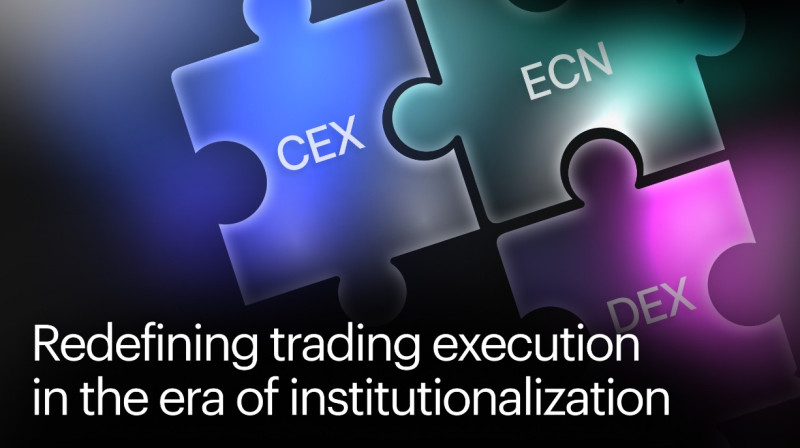
Institutions gravitate to where large orders execute efficiently; currently major CEXs and CME, but DEX liquidity for top assets and ECN pools growing.
Settlement layers stack from base chain to user UI. DEX replaces off-chain matching with smart contract protocols. That cuts a step but adds oracle reliance.
Convergence with trad finance brings prime brokerage, algo TWAP, and better custody. Institutions want large orders filled with low impact. ECN-like platforms marry CEX speed with DEX lack of custody.
Building DEX Platforms With Dev Companies
If you want to launch a DEX, dev shops exist. IdeaSoft, Technorely, OmiSoft are examples with track records. They build AMMs, staking, cross-chain swaps.
Choose based on security audits and past work. White-label can be cheaper. Custom gives full control. I’d vet their Clutch scores and actual shipped products.

What to check in a DEX dev partner
- Proven DeFi experience across multiple chains like Ethereum, BNB, Polygon.
- Core features like AMM, order-match, yield, limit orders, dynamic fees.
- Security audits from CertiK or Hacken and bug bounties.
- Post-launch support for patches and optimizations.
Costs range wide. A white-label DEX might run tens of thousands. Full custom can hit millions. Timeline from weeks to months depending on scope.
IdeaSoft founded in 2016 has over 250 projects. Technorely founded 2018 builds automated trading. OmiSoft founded 2017 does full-cycle DeFi. Aegas and WeSoftYou also show strong reviews.
Key trends push multi-chain routing, liquidity aggregation, and AI market making. Regulatory compliance via zero-knowledge proofs grows. Gamified DeFi with leaderboards attracts users.
When picking, fit vision matters more than logo. Whether slim AMM or custom multi-chain, the partner should speak your language. I’d chat with their devs before signing.
Picking What Fits Your Needs
At the end of the day, dex trading platforms suit those who value control. CEX suits those who want deep liquidity and ease. Many traders use both.
You can find platforms to trade crypto that mix models. ECN-like venues try to marry speed with no custody risk. I’d say test small first.
Always set strict risk controls. Watch funding, oracles, and gas. And don’t skip reading the docs before you punt size. Hey, don’t skip this part if you trade leverage.
The trade-off is between convenience and sovereignty. CEX gives cross-collateral and instant moves. DEX gives transparent swaps with no middleman. Pick what matches your nerve and skill.
If you’re still unsure, peek at Reddit threads on best crypto trading platforms for raw takes. Then try a tiny swap on a DEX and a tiny limit on a CEX. Feel both before committing.
Sophisticated traders often employ both. Always implement disciplined risk controls and due diligence.
I keep some funds on a CEX for quick exits and some in my wallet for DEX perps. That balance works for my calm. Your mix may differ, and that’s fine.















Comments on “How DEX Trading Platforms Work and When They Beat a Centralized Exchange”
No comments yet. Be the first to share your thoughts.