
Where to Buy and Sell Crypto Starts With Picking the Right Type
Most people think where to buy and sell crypto is a size contest - pick the biggest exchange. I used to think that too. But the real trick is matching a platform to your needs. The barriers to trading collapsed years ago. Now the scarce resource is clarity, not access. You’ve got a few main types of venues to evaluate.
When you first ask where to buy crypto coins , you’ll hear about platforms to trade crypto - apps and sites. Some are run by companies. Some live on the blockchain. Others are just people trading with each other. I’ll break these down so you can see the fit.
The old way used to require a broker and a mountain of paperwork. That’s gone. The scarce resource now is clear information, not a place to trade. So I’ll walk through the options in plain words. No hype - just what each type does and where it can bite you.
Centralized Exchanges Are the Common Stop
A centralized exchange (CEX) is a for-profit platform that matches buyers and sellers. It looks a lot like a normal brokerage app. In the U.S., these sites must collect your name and ID to follow federal rules (KYC). The company holds your crypto - that’s counterparty risk - but many offer insurance like FDIC cover on cash balances.
What CEXs Bring to the Table
- User-friendly screens that feel like stock apps
- Support teams you can actually contact
- KYC checks such as name and government ID
- Insurance protections on some balances
- They dominate beginner adoption because they’re easy
The safest exchanges have a long history with zero major security exploits.
They often top the list for new users. But remember: the company controls your coins while they sit there. That’s counterparty risk. I’d check their track record before parking funds. A long clean history matters more than a flashy ad.
Most CEXs make money from commissions, spreads, and maker/taker fees. Some sneak in percent-based withdrawal or deposit fees. That eats your profit if you move money often. Compare total cost across ACH, wire, and card before you commit.
Decentralized Exchanges Give You Control
Decentralized exchanges (DEXs) run on blockchain apps, often on Ethereum. They cut out the middleman via smart contracts. You connect your own wallet and swap coins straight from the protocol. No central custodian means no counterparty risk from a company.
DEX Facts to Know
- No central custodian holding your funds
- Exposure to bugs or hacks in the code
- No FDIC-style insurance safeguards
- Self-custody: lose your wallet, lose your coins
If you go this route, you take on all the safety work. Good for privacy, but not for the faint of heart. I like them for specific swaps, not daily buys. Guard your seed phrase or lose everything.
Because there’s no central desk, price slippage can happen if the smart contract pool is thin. And there’s no customer team to call. The trade-off is clear: more control, more responsibility. Make sure you know wallet basics first.
Peer-to-Peer Trading Still Exists
Peer-to-peer (P2P) platforms work like online boards where traders set their own terms for fiat or crypto swaps. Many hold coins in escrow, releasing only when both sides do their part. Less common than CEXs or DEXs, but still viable for some.
When you wonder buy crypto coins online outside the big names, P2P might show up. Just know the volume is lower and you’re dealing with people directly. Escrow helps, but you still need to verify the other party. I’d use it only if a main exchange fails you.
What to Check Before You Pick a Platform
Choosing where to buy and sell crypto should hinge on a few clear factors. I always look at these before signing up. They help you avoid pain later. A quick scan saves hours of regret.
Key Things to Look At
- Regulatory compliance and U.S. state rules
- Security history and features like 2FA
- Mobile and desktop friendliness
- Fees, including sneaky withdrawal costs
- Supported cryptocurrencies you actually want
- Liquidity for fast order fills
- Support responsiveness
An intuitive UI/UX reduces the chance of costly mistakes from misclicks.
Don’t skip the fee check. Some charge a flat percent to withdraw - that eats gains. Test support by calling or chat if you can. Reddit and Trustpilot give hints, but take them with a grain of salt. Publicly listed firms like Coinbase and Gemini must meet extra transparency rules.
Liquidity sounds dull, but it’s key. Active exchanges fill orders fast at quoted prices. Thin venues cause delays or bad prices during wild swings. If you trade size, this alone can pick your platform.
Top Exchanges for U.S. Users
The U.S. market has a core set of centralized exchanges that show up in most reviews. Coinbase, Binance.US, Kraken, Gemini, and Robinhood lead the pack. Others like Cash App and PayPal serve a narrower need. I’ll walk through each so you can see the trade-offs.
If you search best free crypto sign up bonus , you’ll see ads for these. But bonuses fade; platform fit stays. Focus on the long run. The sources agree on the core five but differ on extra services that make the cut.
Most let you start with a couple of dollars. Requirements vary by payment method. ACH is cheap, wire is fast, card is quick but costly. Pick the rail that matches your habit.
Coinbase and Its Mix of Ease and Fees
Coinbase is a long-standing U.S. exchange with strong compliance and security. It lists a large number of coins, from big ones to many altcoins. The apps are clean and good for beginners. If you need how to buy in coinbase , the flow is simple: sign up, verify, link bank, buy.
Coinbase Pros and Cons
- Long track record of regulatory compliance
- Large selection (25 to 190+ coins)
- Intuitive mobile and desktop interfaces
- Extras: staking and debit card
- High and complex fee schedule
- Past data breach
- Limited free priority support unless subscribed
Some users report slow help on review sites. Still, for many, it’s the first stop. I’d weigh fees against ease. Staking and card add value if you stay in their ecosystem. Just watch cost per trade.
Coinbase also links with traditional finance, which helps at tax time. But the complex fee grid can confuse. Read the fine print before you click buy - that’s where new users lose money by accident.
Binance.US and Low Cost Trading
Binance.US is the U.S. arm of global Binance, separated due to regulation. It follows federal laws and offers competitive fees - sometimes as low as zero percent on certain pairs. If you want to binance buy , check if your state allows it.
Binance.US Pros and Cons
- Highly regulated, U.S. compliant
- Low fees on select pairs
- Staking rewards in some areas
- Lists 50 to 190 plus cryptocurrencies
- Not available in thirteen states
- No derivatives or margin like global site
- No FDIC insurance on USD balances
- UI hard to navigate for some
No phone support is a downside. But cost savings attract active traders. I’d say it’s solid if you’re in an allowed state. Global Binance is blocked for U.S. users - don’t confuse the two.
The interface can feel clunky if you expected the full global feature set. Still, for plain spot trades it works. Verify the token list covers what you want before onboarding.
Kraken for Security and Support
Kraken is one of the oldest U.S. exchanges, known for tight security like armed cold-storage surveillance. They show proof-of-reserves in real time. Support runs global with phone lines. They also offer stocks and advanced trading tools.
Kraken Pros and Cons
- Long-standing, strong security record
- Real-time proof-of-reserves, 24/7 phone
- Kraken Pro for charts and margin
- Offers crypto and traditional stocks
- Not available in every state
- Interface can overwhelm new users
- Instant buy charges flat 1 percent plus spread
- No FDIC insurance on USD
If you want where to buy and sell crypto with a human on the line, Kraken is a good pick. The advanced screen may scare beginners, though. Their cold storage watch is a rare physical security step.
Kraken Pro adds charting and derivatives for those wanting depth. Basic instant buy costs more, so learn the pro side if you trade often. I like that they publish reserves proof - it builds trust.
Gemini Focuses on Compliance
Gemini puts heavy weight on following rules. It has New York state approval and several security certifications. The apps are beginner friendly. They also offer a crypto-reward credit card and a predictions market.
Gemini Pros and Cons
- Strong compliance and certifications
- Multiple security layers like passkeys
- Beginner-friendly mobile and desktop UI
- Extras like reward card
- Limited altcoin selection versus rivals
- Phone support only for card product
- Lower trading volumes than some
- High fees for instant orders
It’s a safe spot, but you may not find every niche token. I’d use it for core coins and ease. The reward card is neat if you already spend a lot. Just note the instant order fee bites.
Because volume is lower, large trades might slip a bit. For small buys it’s fine. The certs they hold show they take audits seriously - matters more to me than a flashy feature.
Robinhood Keeps It Simple
Robinhood is a public U.S. company with zero commissions on stocks, options, ETFs, and crypto. USD deposits have FDIC insurance. The mobile-first design suits everyday investors. But it has had outages and a fine for disclosure violations in the past.
Robinhood Pros and Cons
- Zero commissions on crypto trades
- Publicly traded with strong credentials
- FDIC insurance on cash deposits
- Mobile-first simple design
- History of network outages
- Limited altcoin lineup
- Mixed reviews on support quality
For small buys, it’s fine. Just know the coin list is short. When thinking where to buy and sell crypto without fuss, this app fits. Outages happened at peak times - don’t rely on it for urgent sells.
If you already use Robinhood for stocks, adding crypto is one tap. But lack of wallet transfer for some coins limits self-custody. Check if you can move coins off app before buying.
Cash App and PayPal for Bitcoin Only
Cash App from Square added heavy bitcoin exposure. It only supports bitcoin, which keeps things simple but limits diversification. The app lets you move balances to other wallets. The company bought bitcoin in Oct 2020 and Feb 2021 as part of its strategy. PayPal offers a wallet supporting Bitcoin, Ethereum, Bitcoin Cash, and Litecoin. You hold the private keys.
Some readers ask about buying crypto on webull , but that’s outside this data. I mention it to say: many apps now sell crypto, yet the ones here are the documented ones. Cash App’s CEO leans bitcoin only, so don’t expect altcoins soon. PayPal’s CFO said the firm won’t invest its own capital in bitcoin, unlike some peers.
Huobi Global is a large Hong Kong exchange. It temporarily banned U.S. customers then reopened access in Dec 2020 after a settlement. It runs its own token and faces less U.S. regulation than domestic CEXs. I’d treat it as niche for stateside users.
Other Ways to Get Crypto Without Big Exchanges
Beyond the big five, tools like Ramp Network and Nash help you how to convert money to crypto straight from wallets. These are fiat-to-crypto ramps, not full exchanges. They focus on ease for normal users.
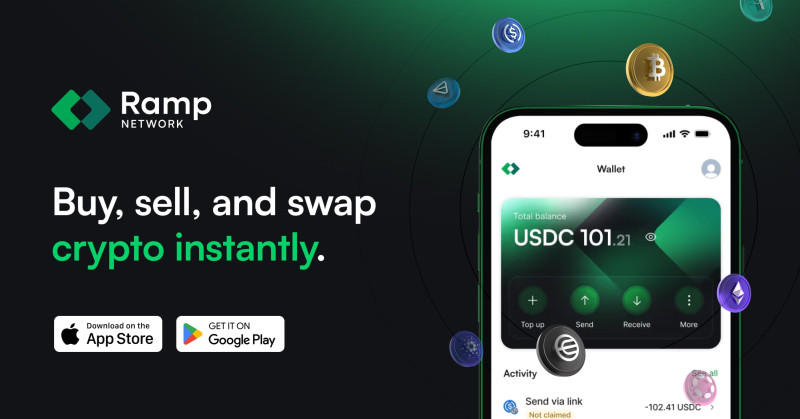
Ramp lets one verification unlock buys in hundreds of wallets like MetaMask and Trust Wallet. They claim up to 99.5 percent savings on network fees when moving BTC to your own wallet. It's beginner friendly, no exchange needed.
Ramp Network Features
- Single verification for many wallets
- Best-in-class prices on network fees
- Beginner-friendly no-stress buying
- Flexible payments like Apple Pay and bank
- Registrations with FinCEN and FCA
Buy crypto without an exchange. No stress, no confusion, just simplicity.
Nash provides a self-custodial wallet plus a ramp. It stresses the custodial debate: with custodial, platform holds keys; with non-custodial, you do. how to turn money into crypto via Nash means choosing a wallet, KYC, link bank, pick token, confirm.
Nash Wallet and Safety Points
- Software wallets for flexible use
- Hardware wallets for long-term storage
- 12 or 24 word seed phrase master key
- Multi-Party Computation for key split
- 2FA and biometrics for access
CoinTracker is another tool that links to over 500 exchanges to track tax. It's a companion, not a place to trade. Good if you use many platforms. It exports IRS-compliant forms, which saves spring headaches.
Selling Crypto for Cash via Banxa and NiceHash
If you need to sell bitcoin for fiat, NiceHash partnered with Banxa shows a clear path. You can banxa buy crypto too, but here the focus is sell. The steps are straightforward and KYC is one-time.
Steps to Sell Bitcoin for Cash
- Login to NiceHash and open Buy/Sell tab
- Select Sell and enter Bitcoin amount
- Choose receiving currency like EUR or CAD
- Pick receipt method usually bank transfer
- Complete KYC with country and ID upload
- Upload photo holding ID for extra check
- Enter bank details and review summary
- Wait for pending then fiat in 1-2 days
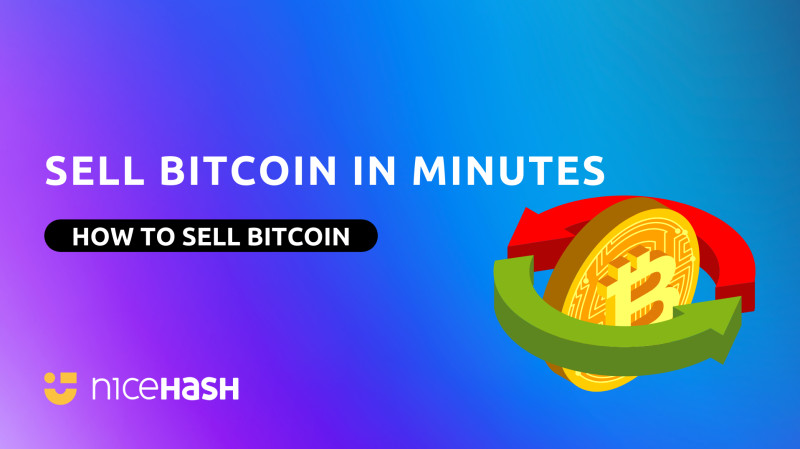
The Bitcoin send to Banxa takes about 15-20 minutes. Then cash lands in your bank. This is a practical way where to buy and sell crypto intersects with cashing out. USD receipt was planned at the time of source, but check current options.
NiceHash is mainly a mining hashpower market, but the sell tab makes off-ramp easy. Banxa handles the compliance. Keep your ID ready for the selfie step; it's a one-time pain.
How Trades Actually Work on an Exchange
Understanding order books helps you see price moves. A market lists bids (buy) and asks (sell). When a bid and ask match, a trade prints to history. Price-time priority sorts orders: best price first, then earliest timestamp.
These mechanisms ensure fairness and transparency on centralized platforms.
You don't need to be a pro, but knowing liquidity matters. Low volume venues cause slips in price during wild swings. The order book is like a public board of intent; nothing hidden on a good CEX.
Trade history shows price, volume, time, and side. Green for buy, red for sell. Watching it trains your eye to real flow versus fake walls. I check it before big orders.
Tax and Legal Basics for U.S. Users
In the U.S., buying crypto is not a taxable event. Selling or disposing is a capital gain or loss based on price versus cost. Some global exchanges are banned; U.S. users must use Binance.US, not global Binance. KuCoin and Gate.io are not permitted for U.S.
Tax and Rule Notes
- Buy is not taxable, sell is capital event
- Global Binance blocked, use Binance.US
- KuCoin and Gate.io not allowed in U.S.
- Most CEXs let you start with a couple dollars
- Coinbase largest U.S. exchange by volume
Always verify state rules before opening. The source notes readers should check fees and jurisdiction. I second that. A quick visit to the state regulator site saves fines later.
If you stake or earn interest, tax may differ; talk to a pro. The IRS treats crypto as property, so each disposal counts. Track cost basis from day one.
Keeping Your Crypto Safe
Choice of custody is key. Non-custodial wallets give control but all responsibility. Custodial gives convenience and maybe insurance, but you trust the firm. Seed phrase is master key: store offline, never share digitally.
Security Steps to Live By
- Use authenticator app not SMS for 2FA
- Store seed phrase on paper offline
- Hardware wallets for large holdings
- Enable biometrics on mobile
- Whitelist addresses to block wrong sends
With a non-custodial wallet, you shoulder all security responsibilities.
Lock things down before you move big sums. I can't stress this enough: lost keys mean lost coins. Public key is for receive, private key signs sends. Never type the seed into a web form.
Hardware devices like Ledger or Trezor keep keys offline. For long-term storage, they beat software. Use address whitelisting on exchanges to stop drain hacks. Small habits, big safety.
A Simple Way to Think About Allocation
One writer shared a calm strategy: about 2 percent of portfolio in crypto balances volatility with low stock correlation. He rebalances at set thresholds. Crypto acts as a temperature gauge for risk taste. Not financial advice, just a sane example.
Crypto’s volatility serves as a “temperature gauge” for the investor’s risk tolerance.
That's a neat frame for where to buy and sell crypto without losing sleep. Pick a platform that lets you execute such a plan with low stress. The main goal was preserving compounding, with crypto as a modest bonus.
I like that view because it kills FOMO. You buy at a lower threshold, sell at an upper one, and shovel gains to index funds. Simple rules beat gut calls. The platform you choose should make those clicks easy, not scary.








Comments on “Where to Buy and Sell Crypto: How to Pick a Platform That Fits Your Needs”
No comments yet. Be the first to share your thoughts.